50 years of EDP, 50,000 hours giving back to the community
When EDP challenged its employees and partners across the world to dedicate 50,000 hours to communities, the objective was never simply to reach a number. It was to demonstrate what becomes possible when an organisation mobilises thousands of people around a shared purpose. By June 30, the day of EDP’s 50th anniversary, that ambition became reality. The original goal had not only been reached but surpassed, with more than 63,000 hours dedicated to creating real value for people, territories and the planet.
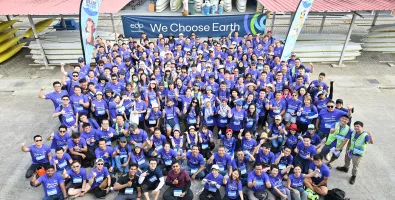
More than an anniversary initiative, Time to Give Back became a global movement. Across 16 countries and more than 200 projects, employees and partners joined forces with local organisations and communities, reinforcing EDP’s conviction that the energy transition can only succeed if it is also fair, inclusive and capable of generating shared value.
To celebrate EDP's 50th anniversary, we are promoting a range of initiatives that honour our heritage while imagining the next 50 years of impact. Among them, the Time to Give Back initiative stands out as a powerful example of EDP’s ability to turn a common ambition into local action, connecting employees, partners and communities around one shared purpose.
Achieved through the collective effort of employees and partners spanning virtually every geography where EDP operates, the initiative resulted in more than 200 projects across 16 countries. By June 30, the day of our anniversary, the original goal had largely been surpassed, with more than 63,000 hours dedicated to creating real, lasting value for people, for territories and for the planet - the equivalent of one person working eight hours a day, every day, for more than 21 years.
Martim Salgado, Social & Foundations Executive Director, explains how from environmental action and biodiversity to education, social inclusion and fair energy transition, the Time to Give Back initiative brought together thousands of people around a shared purpose, and why it matters to EDP.
A commitment rooted in EDP’s history
The 50,000-hour goal did not emerge from nowhere. EDP’s volunteering programme has been running for 15 years, constantly building on a culture of participation, a network of trusted partners, and a shared sense of responsibility that stretches across the organisation.
For Martim Salgado, the anniversary created an opportunity to do something bigger than launching another volunteering campaign: “It gave us the chance to mobilise thousands of people around a common purpose and show that creating social impact is something the whole organisation can own.”
That mobilisation was only possible because of the work built over time. “The 50,000 hours were possible because we have spent the last 15 years building a volunteering culture, trusted partnerships and local knowledge”, highlights Martim Salgado, “and the anniversary gave us the opportunity to turn that culture into a global movement”.
That movement sits at the heart of our social impact strategy, which is built on the conviction that a successful energy transition must also be a fair and inclusive one. Giving back is not a side project. It is one of the most visible expressions of how we understand our role in the world.
What Time to Give Back ultimately demonstrates is that social impact is not created by a single programme, team or Foundation. It is created when an entire organisation aligns behind a common ambition while giving local teams the freedom to respond to the realities of their own communities.

What 50,000 hours of Give Back look like
Time to Give Back was intentionally designed to maximise participation. Rather than defining a single model of volunteering, the initiative encouraged employees and partners to contribute in ways that reflected the realities of their communities, their skills and their interests. That flexibility proved essential to mobilising thousands of people across very different countries and cultures.
Give Back is a deliberately broad concept - broader than traditional volunteering. It encompasses any action, large or small, through which our employees and partners give time, skills or effort to create positive impact. That breadth was intentional: we wanted to ensure that practically anyone could find a way to take part.
As Martim Salgado puts it: “Initiatives range from environmental and social actions to activities held in our offices, family volunteering, and even innovative formats that turn physical activity into donations for social organisations”. The important thing, he adds, “is not the format - it is that every hour represents value created for communities, and that each initiative brings more people into the movement”.
Creating positive impact
While initiatives addressed different local priorities - from biodiversity and environmental restoration to education and social inclusion - they all shared one common objective: creating meaningful value alongside communities rather than for communities.
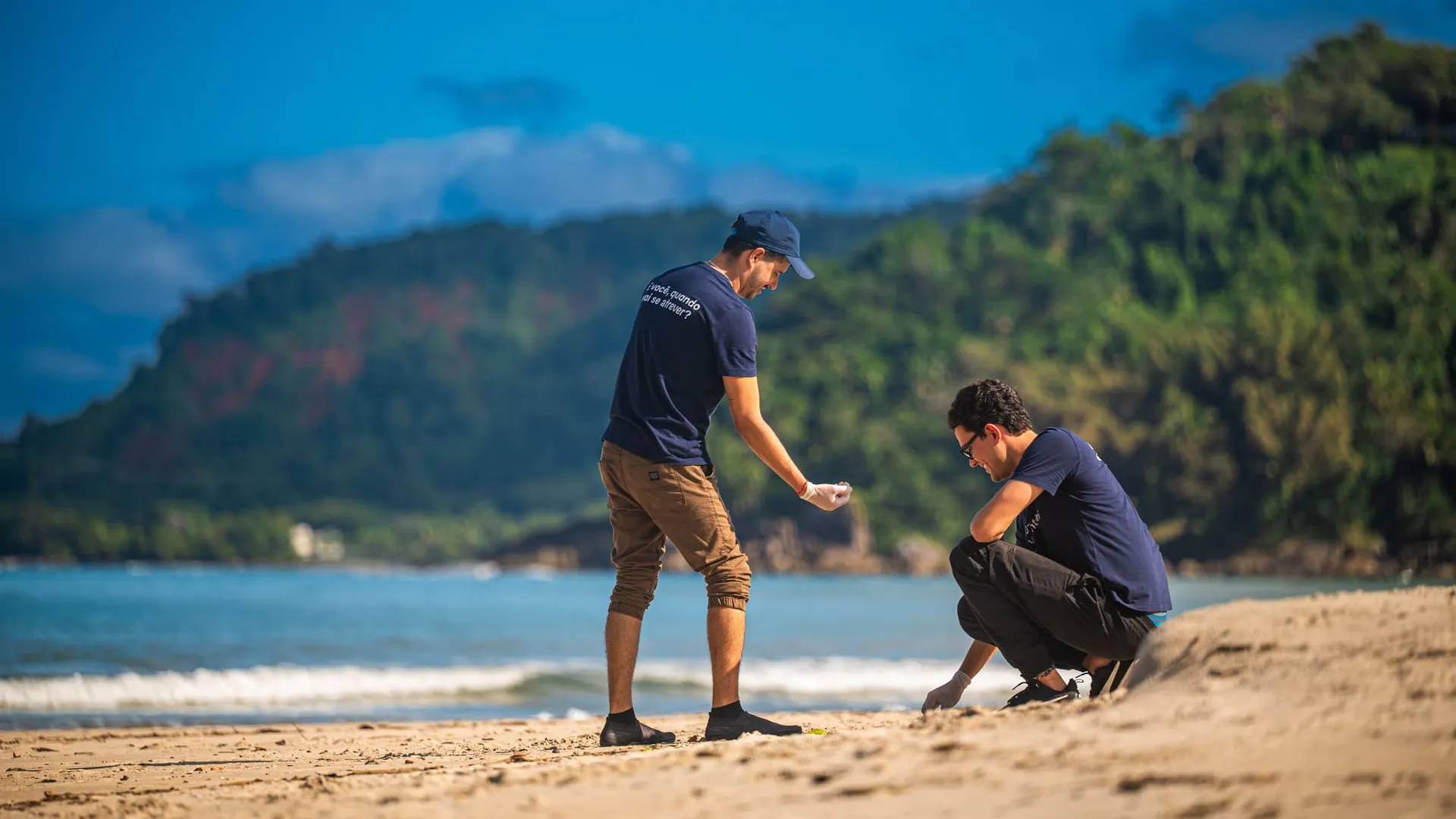
Time to Give Back concentrated efforts across four main areas: environment and biodiversity, social inclusion, education, and support for local communities. “Biodiversity carried particular weight”, notes Martim Salgado, “reflecting its growing importance both for EDP and for society at large”.
But perhaps the most distinctive aspect, in his words, was “managing to bring employees and communities together in the same initiatives - creating much closer relationships and a more lasting impact”. Rather than arriving as outsiders, our people joined local organisations and their beneficiaries in shared action, building connections that are likely to outlast any single project.
That human dimension was felt throughout. “We saw employees taking part with colleagues, with their families, and even mobilising external partners”, says Martim Salgado, “which shows that Give Back stopped being just a company-organised initiative and became something people feel is truly their own”. And the fact that our employees spent time away from the office, away from day-to-day tasks and meetings, helped to strengthen bonds, encourage teamwork, and foster a sense of personal fulfilment.
A global movement
Mobilising more than 63,000 hours across 16 countries was never primarily a logistical challenge. It was a leadership challenge: creating one shared ambition while allowing every geography to make it meaningful for its own communities.
“What struck us most was how this challenge was embraced across such different geographies”, Martim Salgado explains, “we set a global ambition, but gave local teams the freedom to create initiatives that were truly meaningful for their own communities. That combination of a common ambition and local implementation was decisive”.
Employees across the regions where we operate took part, making this a truly global effort. And behind every initiative stood a wide network of partner organisations. As Martim Salgado points out, our partners “are essential because they have a deep understanding of community needs. Our role is not to replace that knowledge - it is to place EDP's capacity for mobilisation at the service of organisations already doing extraordinary work on the ground”.
Rather than trying to replace local expertise, EDP focused on mobilising its people, resources and capacity to amplify work that was already creating value on the ground.
Volunteering as part of the journey
EDP's formal volunteering programme, launched 15 years ago, provided the foundation for the Time to Give Back initiative, and it paves the way for the years to come. Looking back, the biggest transformation has not been the number of initiatives, but the evolution from isolated volunteering actions into a platform capable of mobilising people, building partnerships and measuring impact consistently across the organisation.
“The biggest shift was moving from one-off actions to a genuinely strategic programme”, Martim Salgado reflects, “Today we have a global vision, a common policy, a much stronger partner network, and a growing focus on measuring the impact we generate”.
Over those 15 years, initiatives broadened from traditional volunteering to structured projects developed in partnership with local organisations, aligned with the social and environmental priorities of the communities where we operate. It is also a programme open to external partners, and for Martim Salgado, “it is the relationship of trust built over many years that makes it possible to generate impact at scale”.
Looking ahead
50,000 hours is a milestone, not a conclusion. “For the communities we work with, we hope to leave stronger organisations, more sustainable projects, and relationships of trust that run even deeper”, Martim Salgado notes. The legacy we hope to build is both cultural and practical - and it starts with the belief that social impact does not depend only on financial investment.
For us at EDP, this movement reinforces a culture of participation, resilience and shared responsibility that we are committed to developing over the next 50 years. And it affirms a core belief: that the energy transition will only truly succeed if it is also a fair transition, one that creates real value for the people and communities at its heart. Concluding, Martim Salgado hopes that “what remains is the idea that time, skills and the engagement of people can be equally transformative”.
As EDP looks towards its next 50 years, Time to Give Back stands as more than an anniversary initiative. It is proof that when a global organisation combines a shared purpose with local ownership, it can mobilise people at scale and create lasting value for society.
Surpassing our original goal of 50,000 hours marks an important milestone in our journey, but it is far from the finish line. As we imagine the next 50 years, we remain committed to working every day alongside our people, partners and communities to generate lasting social and environmental impact, helping build an energy transition that leaves no one behind.
Find out more regarding EDP’s 50th anniversary celebration, and learn everything about the EDP Volunteer Program.