


The POCITYF project concludes and demonstrates that energy transition can coexist with the preservation of historical heritage
The European project, led by EDP, comes to an end after testing more than 50 innovative solutions in Évora and Alkmaar, leaving a legacy of knowledge and best practices to support other historic European cities on their path to climate neutrality.
The energy transition and the preservation of historic heritage do not have to be conflicting goals. This is one of the key conclusions of POCITYF, a European project funded under the Horizon 2020 programme, led by EDP and developed by a consortium of 48 European partners. After several years of demonstrating innovative energy, mobility and urban digitalisation solutions in Évora, Portugal, and Alkmaar, the Netherlands, the project has now reached its conclusion. Its objective was to demonstrate how cities with significant heritage constraints can progress towards climate neutrality through integrated and replicable approaches.
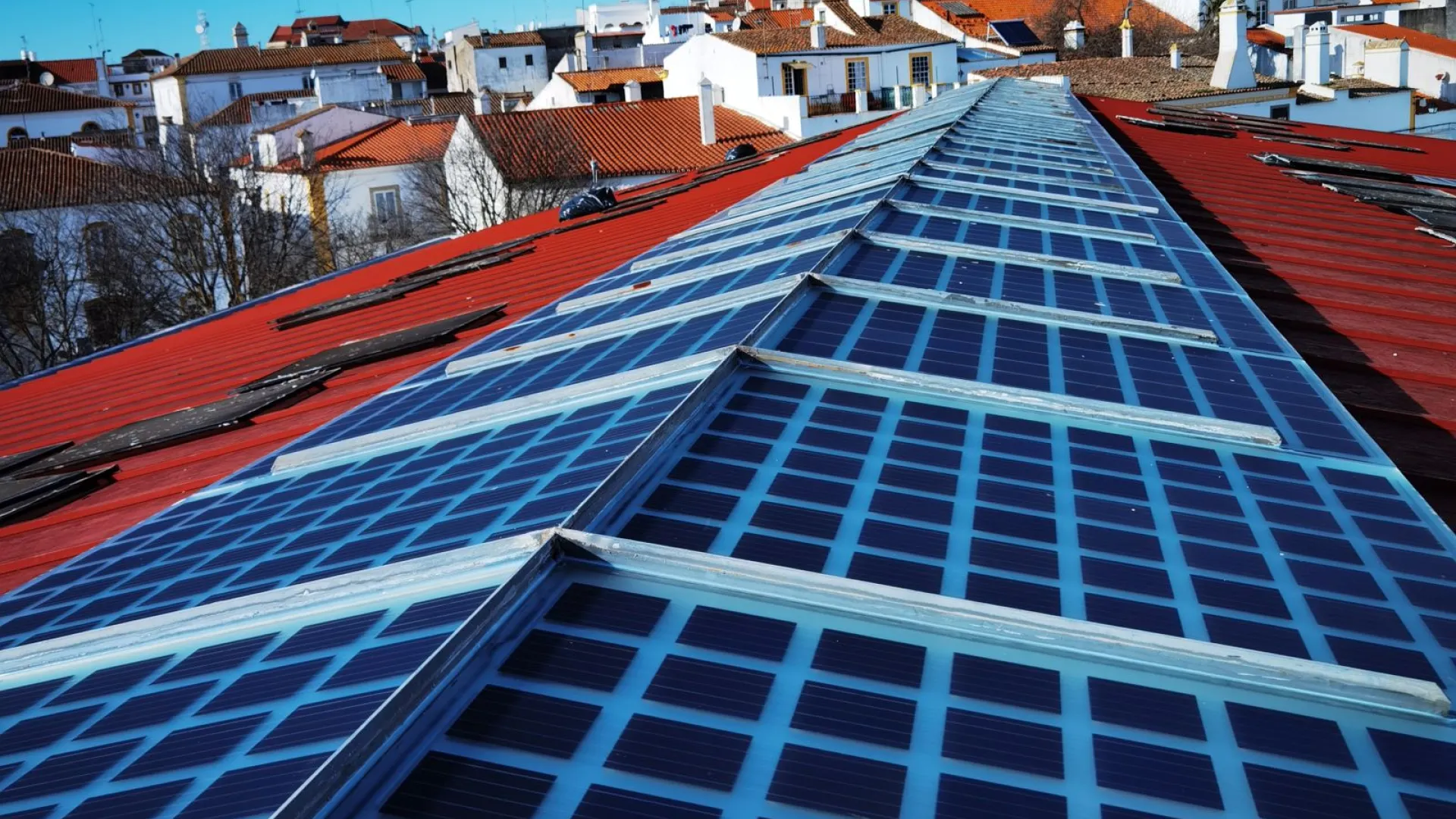
Over the course of the project, more than 50 innovative solutions were demonstrated across four main areas: positive energy buildings and districts, smart energy management and storage, the integration of electric mobility, and digital platforms for smart cities. These included building-integrated photovoltaic systems such as solar roof tiles and solar glazing, energy communities, thermal and electrochemical batteries, energy management and flexibility platforms, and intelligent urban infrastructure for electric mobility.
"The key message of POCITYF is that innovation and heritage preservation can go hand in hand and contribute to the same purpose. By testing solutions in a real-world environment, in a historic city such as Évora, we demonstrated that it is possible to build the future without losing the character of the past," says João Cravinho, Research and Innovation Engineer at EDP and Lead Coordinator of the project. "More than validating technologies, the project enabled the development of knowledge, experience and new approaches to integrating the energy transition into particularly demanding urban environments. The true legacy of POCITYF lies precisely in this: delivering a model that has been tested in the field, built on concrete solutions and accumulated learning, and which can support other European cities in building a more sustainable future," he concludes.
In Évora, a UNESCO World Heritage city, the solutions were adapted to the particular characteristics of the historic centre, combining technological innovation with heritage preservation. Results indicate average energy savings of between 16% and 20% in Évora, together with an estimated 15% reduction in greenhouse gas emissions. Across all the initiatives developed by the consortium, more than €18 million of investment was mobilised.
In addition to the demonstrations carried out in Évora and Alkmaar, the project worked with six partner cities across Europe to share and adapt the solutions developed, helping to accelerate the adoption of similar approaches in other urban contexts. These activities involved Bari (Italy), Celje (Slovenia), Granada (Spain), Hvidovre (Denmark), Ioannina (Greece) and Újpest (Hungary), all of which participated in the replication and knowledge-transfer activities undertaken by the project.
As part of their respective municipal climate transition plans for 2050, several of these cities have identified solutions and approaches tested within POCITYF as relevant elements for their future strategies, helping to continue the work undertaken and further explore the concept of Positive Energy Districts (PEDs) in different urban environments.
The project’s results and key conclusions are being presented on 29 and 30 September in Évora during the POCITYF Final Event. The gathering brings together consortium partners, municipal representatives, policymakers, regulators and European experts to discuss how the project’s lessons learned can help accelerate the climate transition in other historic cities across Europe.
For more information about the project and the solutions developed, please visit the official project website: https://pocityf.eu/.