POCITYF: how EDP led the smart evolution of historical cities
Goals
POCITYF was a European smart-city project that aimed to deliver a set of Positive Energy Blocks - delimited geographic areas whose average local renewable generation exceeded consumption - in the Lighthouse Cities of Évora (Portugal) and Alkmaar (The Netherlands), with planned replication across the Fellow cities.
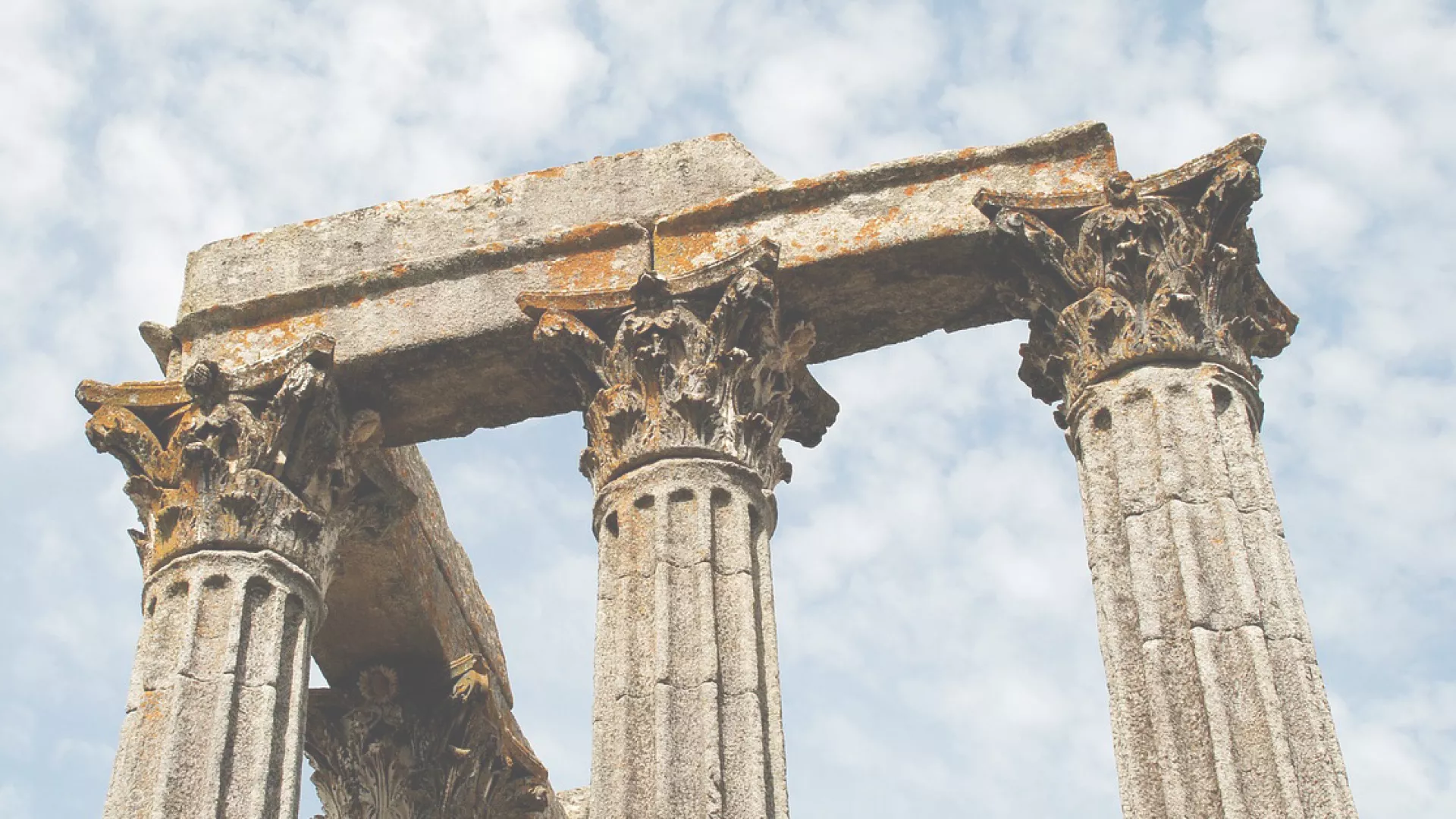
Over seven years, the project transformed the urban fabric of these cities, focusing specifically on culturally and historically protected areas. It demonstrated that it is possible to enhance urban quality of life and sustainability without compromising the architectural and cultural identity of the territories. Évora (a UNESCO World Heritage site) and Alkmaar served as living laboratories to test decarbonisation solutions under strict regulatory and architectural constraints.
Deployed solutions
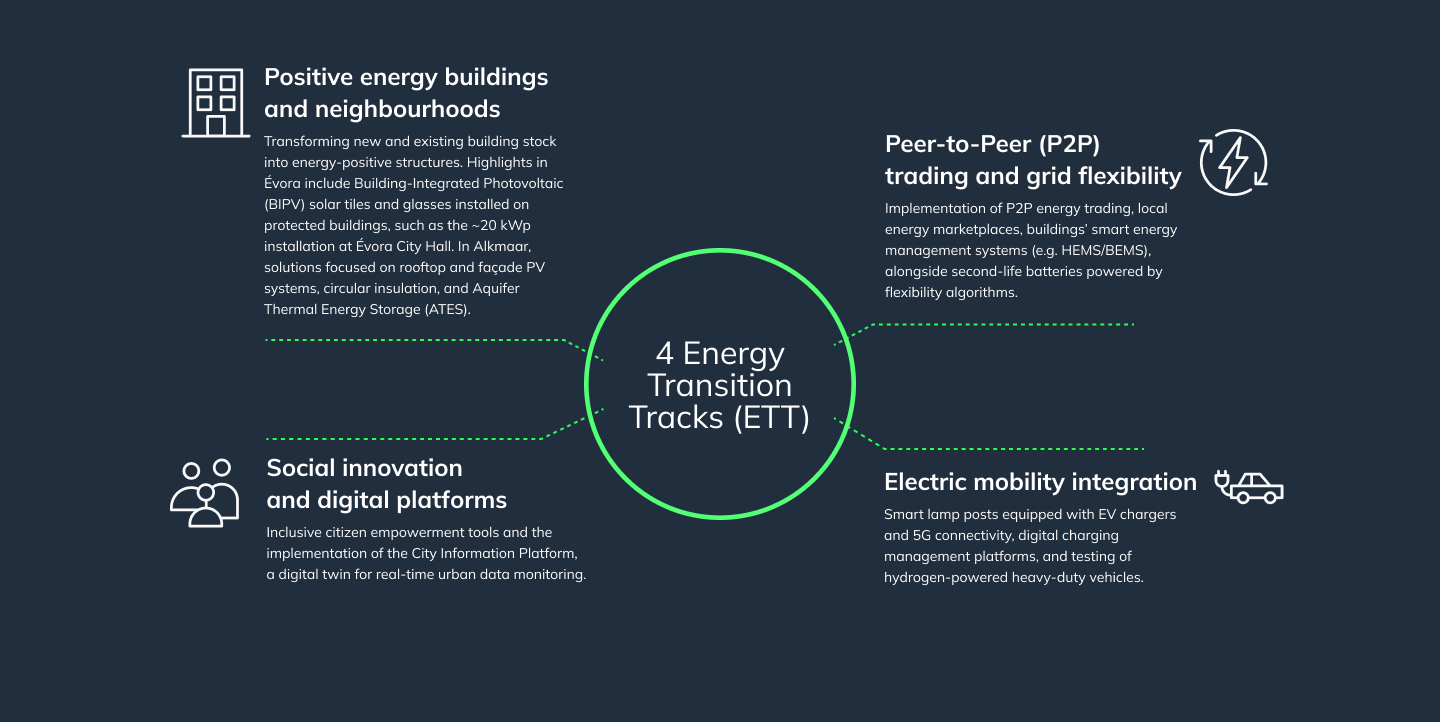
POCITYF's 50+ technologies and tools were structured around 4 Energy Transition Tracks (ETT):
Final results
The solutions were deployed in an integrated way, but we can isolate the project's final results, by city:
| Indicator | Alkmaar (The Netherlands) | Évora (Portugal) |
|---|---|---|
| Energy savings (vs. 2019 baseline) | Up to +50% in individual buildings/districts; ~4% city-wide average | Up to +80% in individual buildings/districts; 16-20% city-wide average |
| Self-sufficiency ratio | Up to +70% in individual buildings/districts; ~22% city-wide average | |
| Installed PV capacity | ~109 MWp | ~6.4 MWp |
| Installed storage capacity | ~1,041 kWh | ~118 kWh |
| GHG emissions reduction | 30% | 15% |
| Total investment mobilised | ~€18M (combined) | |
Scope of EDP's R&D Centre
With EDP as project coordinator, our R&D Centre played a pivotal role:
- Leading and executing demonstration activities in Évora, specifically integrating tools into the distribution grid, operating the local energy marketplace, and simulating market participation through building flexibility within the Portuguese demonstrator
- Coordinating alignment and clustering with other European smart city projects and initiatives
- Defining technical requirements, citizen engagement strategies, and circular/sharing economy business models