


EDP launches the first triple-hybrid renewable energy project in the Iberian Peninsula
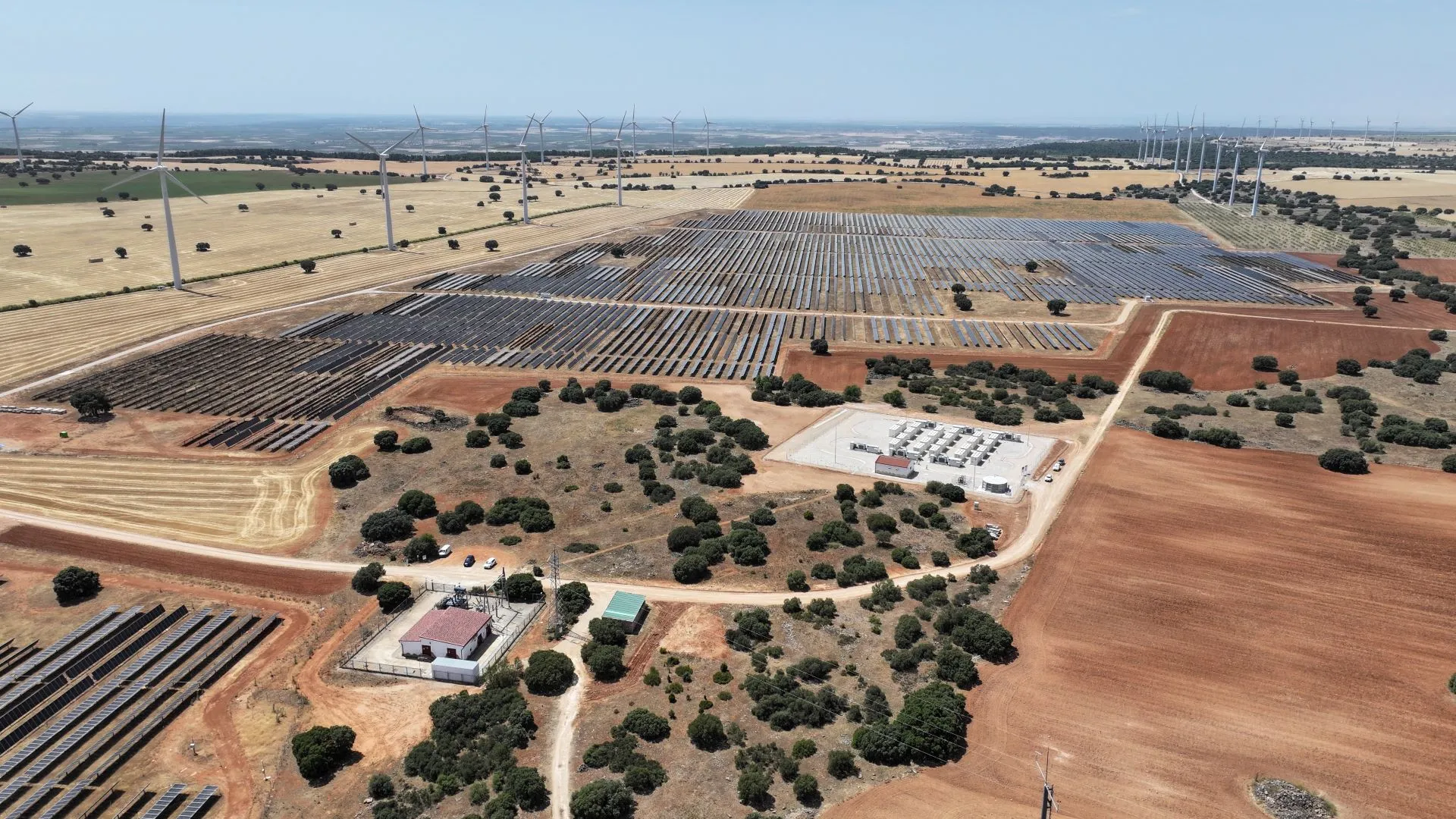
EDP is taking another step forward in delivering flexible renewable energy generation solutions to the market. The energy group has just started testing the battery storage module at its hybrid renewable energy site in Las Lomillas (Cuenca), where three renewable technologies are integrated through a single grid connection point: 122 MW of wind, solar and battery storage capacity, making the most of an energy infrastructure with approximately 50 MW of grid export capacity.
This is the first project of its kind in the Iberian Peninsula. The current battery testing phase marks the final step before the system enters commercial operation.
The site has evolved since the commissioning, in 2005, of a wind farm comprising 33 turbines with a total installed capacity of 49.5 MW. In 2025, a 36 MW solar photovoltaic plant was added and, now, a 36 MW (72 MWh) battery energy storage system. Altogether, the site brings together 122 MW across three technologies that optimise renewable energy generation while enhancing the stability and flexibility of the electricity system, enabling greater integration of clean energy into the grid.
These three technologies are coordinated by an energy management system that makes operational decisions based on advanced algorithms and under the supervision of EDP’s energy management teams and control centre. Installed at the site’s electrical substation, the system determines whether it is more efficient to feed solar and wind energy directly into the grid, store it in the batteries, or even charge the batteries using electricity from the grid for later dispatch.

With the commissioning of the battery storage system at Las Lomillas, EDP is taking a decisive step towards a more flexible and efficient renewable generation model. The integration of energy storage makes it possible to transform this renewable site, inherently intermittent by nature, into an almost fully dispatchable facility capable of adapting its output to the needs of the electricity system while maximising the use of its grid connection capacity.
In addition, it helps address one of the main challenges of the energy transition: the limited availability of grid access and connection capacity. By optimising existing infrastructure, it enables greater integration of renewable energy without the need to develop new grid connection points.
The Las Lomillas storage facility, with 36 MW of power and 72 MWh of storage capacity, forms part of the IDAE Support Programme for Innovative Energy Storage Projects Hybridised with Renewable Electricity Generation Facilities under Spain’s Recovery, Transformation and Resilience Plan, funded by the European Union – NextGenerationEU. The initiative has been awarded maximum funding of €6.2 million.
EDP is a pioneer in renewable hybridisation in the Iberian Peninsula, with almost 1 GW of hybridised capacity. In Spain, the company has commissioned the Cruz de Hierro project in Ávila, with a combined wind and solar capacity of 28.8 MW; Villacastín in Segovia, with 28.2 MW; Castillo de Garcimuñoz in Cuenca, with 46.4 MW; and Rabosera in Zaragoza, with 40 MW. With the full hybridisation of Las Lomillas now in operation, the company surpasses 260 MW of hybridised capacity in Spain.
The company also operates hybrid renewable energy sites in Portugal, a pioneering market where it commissioned the Iberian Peninsula’s first hybrid project. These facilities account for almost 700 MW of capacity: Alto Rabagão, with 68.2 MW (hydropower and floating solar); Alqueva, with 527 MW (hydropower, floating solar and batteries); Mina de Orgueirel, with 19.3 MW; Monte de Vez, with 42.7 MW; and Charneca das Lebres, with 39.3 MW (all wind and solar projects).
In Castilla-La Mancha, EDP operates 10 wind farms and two hybrid photovoltaic plants, with a total installed capacity of more than 480 MW. Through this initiative, EDP reaffirms its commitment to innovation, sustainability and the development of efficient energy solutions that contribute to a cleaner and more secure future for all.


