


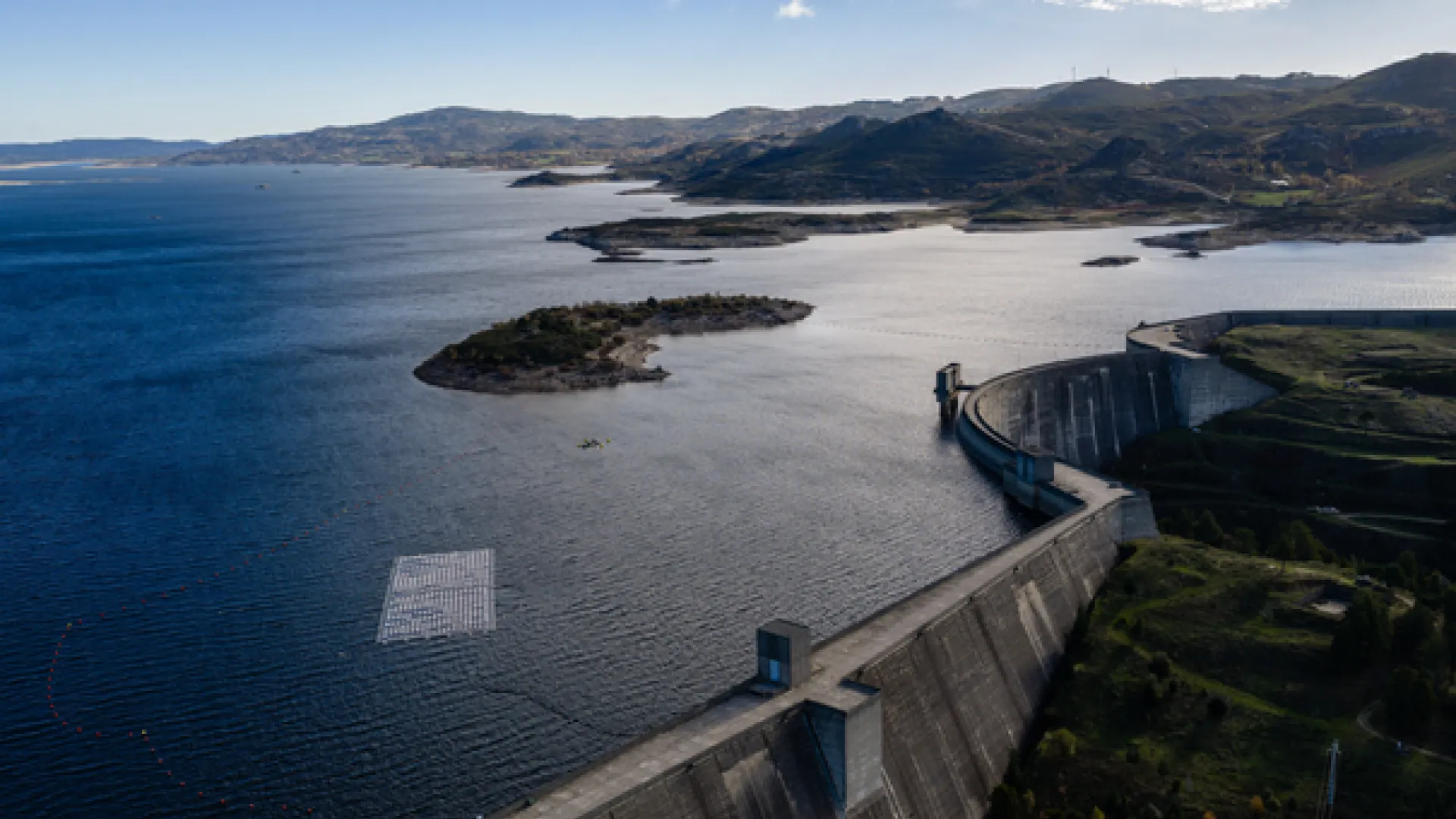
EDP launches a pioneering laboratory in Europe to test floating solar technologies with open access for the community
Located in the Alto Rabagão reservoir, the Floating PV Lab forms a hybrid ecosystem — combining floating solar and hydro — that will enable small and medium-sized enterprises, as well as start-ups, to test, validate and accelerate the market entry of innovative solutions in a real-world environment
EDP takes another significant step towards innovation in the energy sector with the launch of the Floating PV Lab, Europe’s first open-access laboratory for testing technologies associated with floating and hydro solar power generation. In practice, EDP is making the infrastructure of its hybrid park at Alto Rabagão, in Portugal, available and transforming it into a collaborative space where companies, start-ups and research institutions can test and validate innovative solutions focused on the energy transition, accelerating their market entry. The Alto Rabagão floating solar pilot project, initiated in 2016, was a global pioneer in trialling and developing the hybridisation model by combining hydroelectric power from the dam with floating solar energy.
In this unique environment, researchers and industry professionals will have the opportunity to develop and refine their technologies under real production conditions and extreme weather scenarios, such as strong winds, waves, snow, and both high and low temperatures. It will be possible to validate floating systems, test operation and maintenance (O&M) solutions, apply data processing systems with artificial intelligence, and implement hybrid systems for energy generation and storage.
“Floating solar technology continues to show enormous potential for development, with new technical solutions emerging to reduce the implementation and operational costs of these projects. With the Floating PV Lab, EDP reinforces its commitment to innovation and technological progress, positioning this space as a collaborative and strategic ecosystem,” says Pedro Miguel Oliveira, Head of New Technologies and Special Projects at EDP. “By staying up to date with these innovations and their performance, EDP ensures a competitive advantage in the development of future renewable energy projects,” he concludes.
The initiative already includes two pilot projects currently in the testing phase. Fred Olsen 1848’s project will trial the first automatic tension buoy for floating photovoltaic systems, aiming to validate its functionality in a real environment with water level variations, offering a highly competitive solution from an investment perspective. Meanwhile, Sperra’s project focuses on validating a gravity anchor using 3D-printed concrete technology, optimising the geometry for the specific site. In this context, performance tests will be carried out under exposure to local weather conditions, which tend to be particularly unfavourable during winter. Following validation, the goal of both pilot projects—each lasting one year—is to apply these solutions and installation methods to future floating solar installations.
To provide additional support for the Floating PV Lab project, EDP is offering a workspace for companies wishing to use the platform for testing. This experimental laboratory will run for three years and is open for applications. The annual usage fee is €10,000, with costs adjustable depending on the complexity and duration of the projects. Interested companies can apply via the website https://edp.com/en/innovation/innovation-projects/floating-pv-lab.