


Risk Management Process
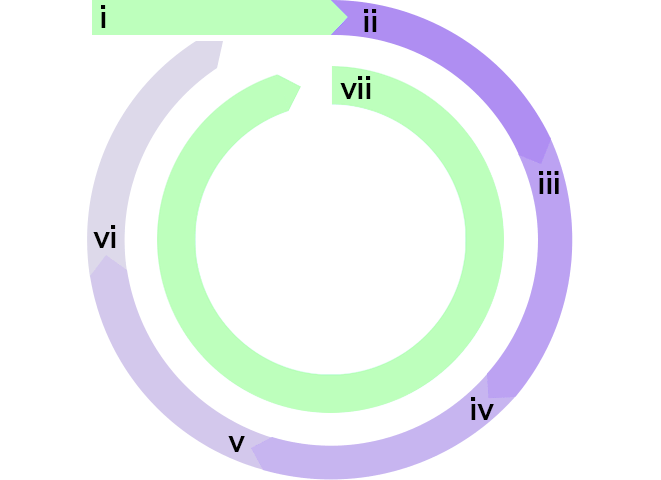
Given the size of the EDP Group and its geographical diversity, it is important to define a transversal and consistent process at the level of the various Platforms and Regions, which at the same time recognises the heterogeneity of the businesses and activities in which the Group operates. In this way, risk management in the EDP Group is structured around five main phases (identification, analysis, evaluation, treatment, and monitoring), complemented by a prior phase of establishing the context, and by adequate levels of communication between the various stakeholders:
i. Establishing the context
- Assessment of the external and internal environment
- Defining the fundamentals for risk management
ii. Identification
- Comprehensive mapping of key risks (and representation in structured taxonomy)
iii. Analysis
- Establishment of risk criteria
- Risk Materiality Analysis (qualitative and quantitative)
iv. Assessment
- Exposure Assessment in light of risk appetite
- Definition of treatment strategies to implement
v. Treatment
- Implementation and execution of the established treatment plan
vi. Monitoring
- Monitoring and reporting the evolution of risk indicators, materialization of events and progress of treatment measures
vii. Communication
- Continuous and bidirectional communication between relevant stakeholders
Fundamental
phases
Preliminary/continuos
phases
Download the PDF below for a detailed description of EDP Group’s Risk Management Process.
Learn more about risk management at EDP

1774866731