


Meadow Lake Wind
Project overview
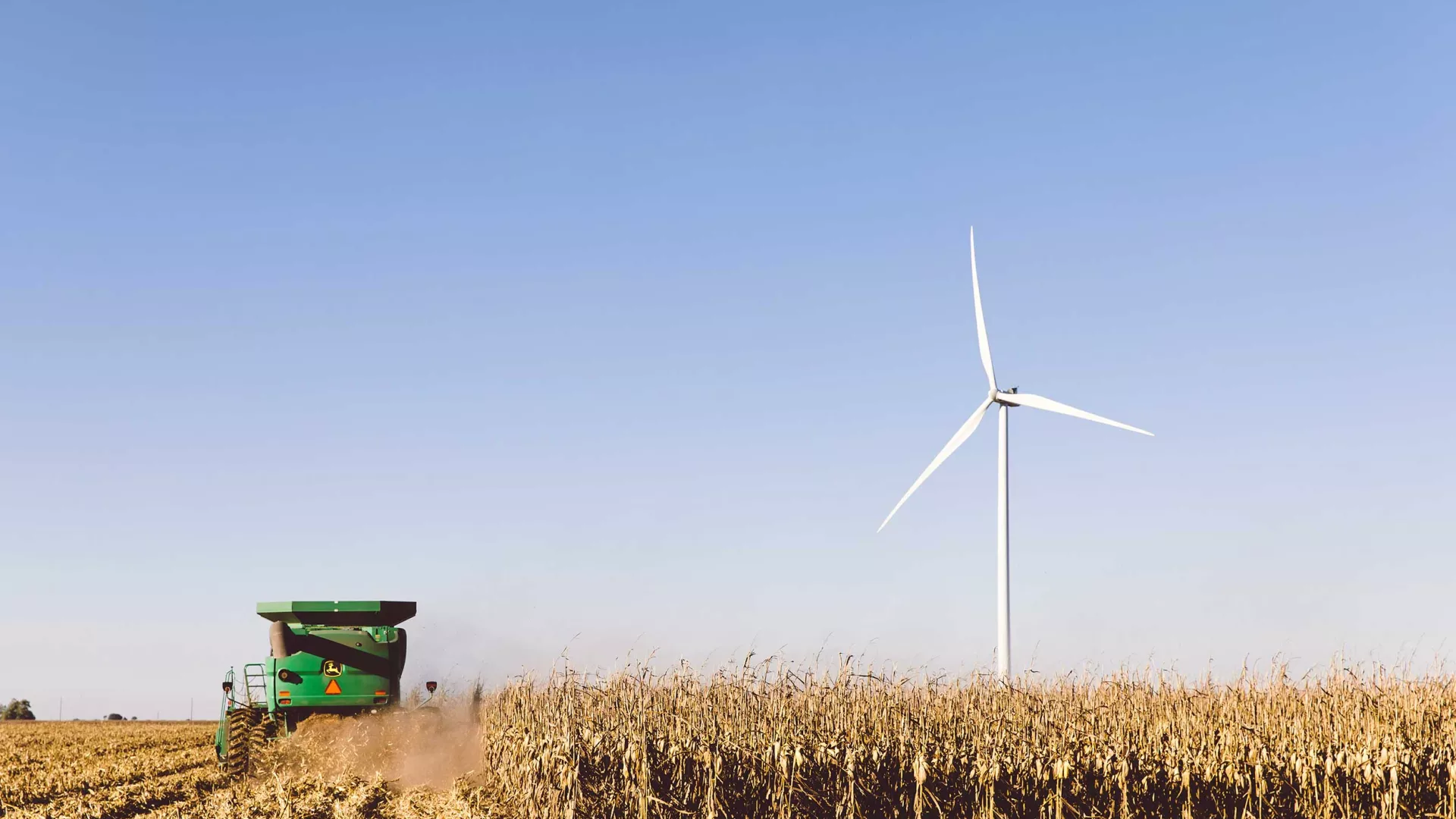
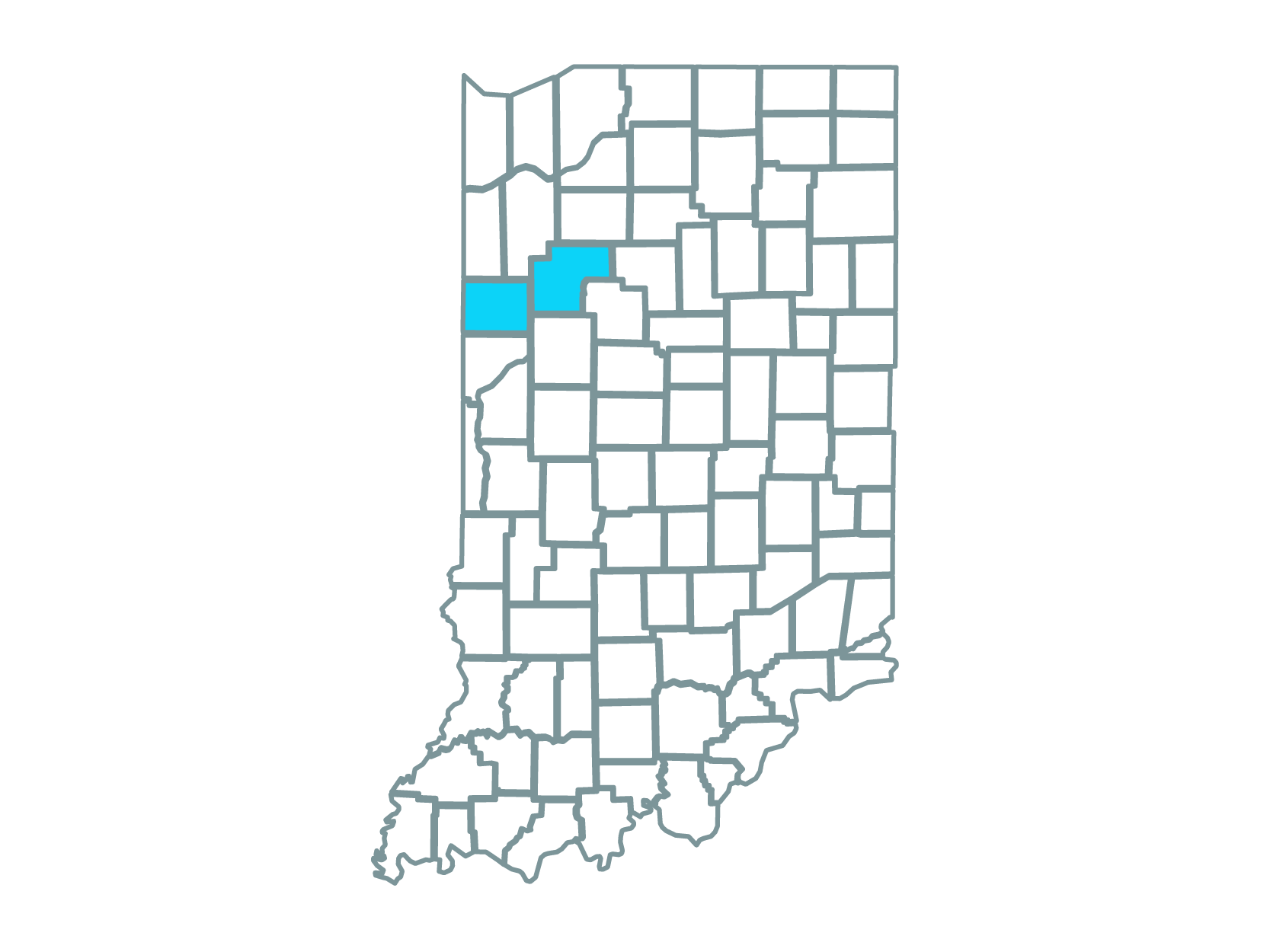
Meadow Lake Wind consists of six phases and is located in northwestern Indiana in Benton and White counties, northwest of Indianapolis. The site is advantageous as a location for modern wind power electrical generation as the area has a strong, proven wind resource.
Meadow Lake IV Repower is now under construction
Economic benefits
Total project impact
Paid to local governments
Paid to landowners
Spent locally
655 construction jobs and 51 permanent jobs created
Powering America
Wind energy development
Solar energy development

Renewables and local experiences
Meadow Lake Wind IV Repower
This construction project will retain the existing towers and foundations while upgrading the blades and nacelles with newer turbine technology, supporting efficient and reliable operations through 2050. During construction, EDPR NA’s Meadow Lake team will provide daily email updates to keep residents informed of road closures and on-site activities.
Wind turbines have an operating lifespan of approximately 20-30 years. Throughout operations, EDP Renewables North America (EDPR NA) continuously monitors turbine performance, conducts maintenance, and identifies opportunities for improvement. As turbines age, EDPR NA may consider replacing major components or rebuilding a turbine completely before a turbine reaches the end of its original operational life span if the efficiencies to be gained justify it. This process is called “repowering.”
Like any technology, wind power technology is constantly improving. With age, older technologies can become more expensive or challenging to repair. Repowering allows EDPR NA to harness technological advancements that were unavailable when the site was initially developed; repowering increases project efficiency and maximizes power generation in some of the nation’s windiest locations—all while working with the same landowners and using existing infrastructure.
Yes. Repowering a wind site is a major construction project that employs hundreds of people. Below are some of the services EDPR NA will source locally for construction:
- Civil contractors
- Concrete supply + delivery
- General laborers
- Safety staff
- Excavation and restoration
- Gravel supply and delivery
- Heavy equipment operators
Meadow Lake Wind IV has provided White County with $743,000 for the White County Highway Department to complete all pre‑construction road improvements and to maintain and manage dust control on public roads throughout the repower construction period.
Upon completion of construction, Meadow Lake Wind IV will provide an additional $1.8 million for the White County Highway Department to resurface the public roads located within the Meadow Lake IV project area.
The main construction hub, also known as the laydown yard, serves as the central area for construction activity. The Meadow Lake Wind IV Repower laydown yard will be located just north of the US‑231 and I‑65 intersection, across from the Marathon gas station. Temporary office trailers will be installed on-site to support construction operations.
Meadow Lake Wind IV Repower Construction consists of upgrading and improving the blades, foundation, substation, and Meteorological Tower. Each of these areas will undergo improvements to ensure the site operates efficiently and reliably once it comes online. The improvements in each of these areas are further described below.
Blade removal and disposal
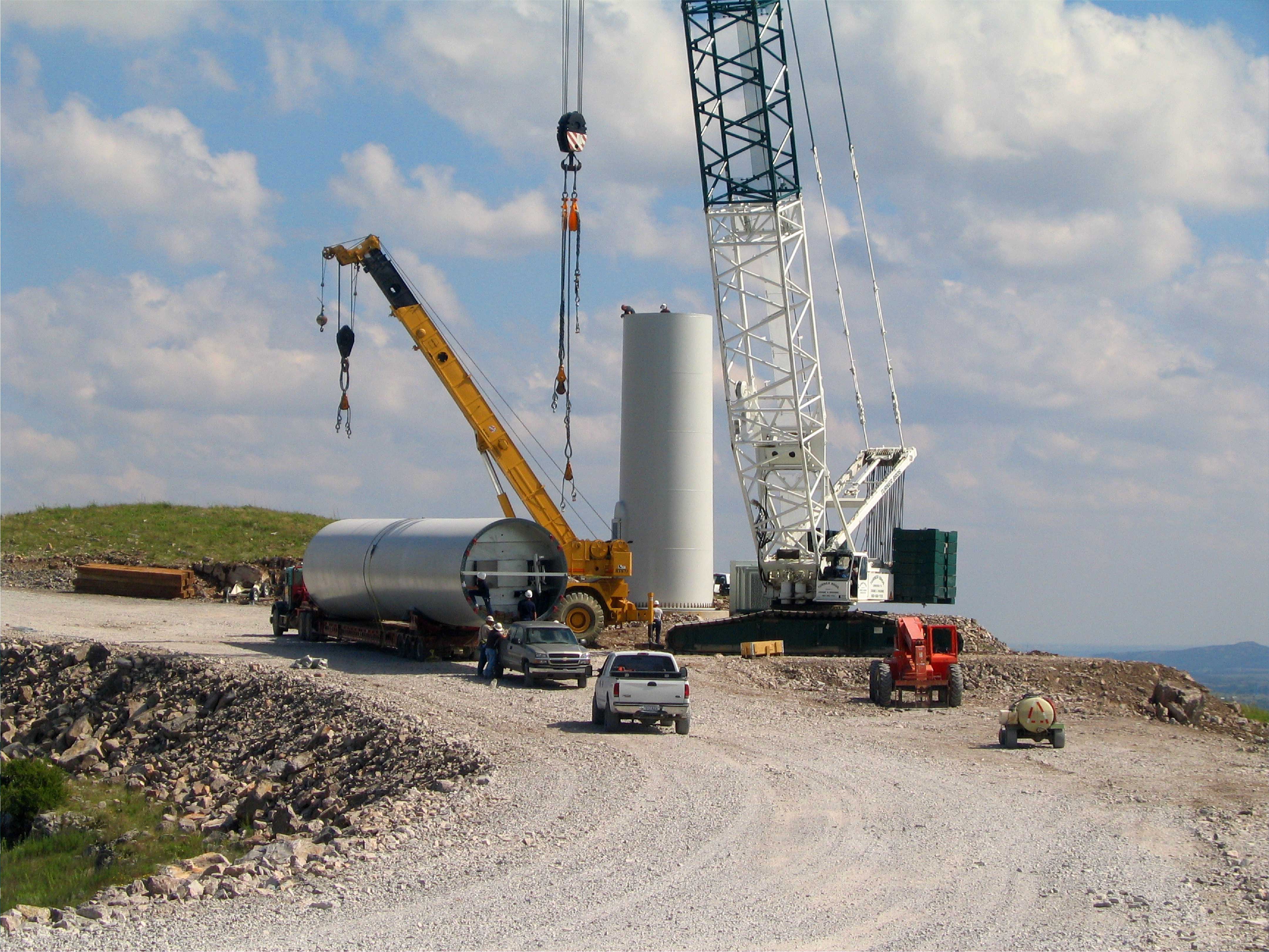
A crane will remove wind tower components and place them near the tower pad. Here, each blade will be cut down for easier transport to the waste-to-energy facility. The nacelles will also be removed via crane and sent to a facility where all metal components will be recycled.
Blade delivery and installation
A crane places sections of the tower on the foundation. Then, the nacelle, which contains the shaft, gearbox, and electronic controls, is placed on top of the tower. Lastly, the blades are connected to the shaft in the nacelle through a section of the turbine called the hub.
Foundation improvements
Based on our geotechnical evaluations and on‑site foundation assessments, the Meadow Lake IV turbine foundations remain in excellent condition. Since the original foundations were built in 2010, industry engineering standards for wind turbine foundations have been updated. To meet these current standards—and to support the increased forces and pressures associated with the longer blades used in the repowered turbines—the project will include adding a concrete foundation collar to the existing foundations.
Substation
Meadow Lake IV Repower will connect to the existing substation. This substation will undergo upgrades from July 15 to August 15. During this time, all turbines in Meadow Lake IV and V will be manually shut down so contractors can complete the work safely. Once the work is done, the clean, renewable power will reach the electrical grid again, and power will be sent to the homes and businesses where it will be used.
Meteorological (Met) Tower Construction
The meteorological, or “Met,” towers measure wind speeds at the same height as the turbine hubs. Meadow Lake IV Wind currently has one permanent Met tower, originally installed in 2010. Because the repowered turbines will have hub heights that are 15 feet taller, the existing Met tower will be retrofitted to accurately measure wind speeds at the new hub height.
Yes. EDPR NA is committed to working closely with landowners to ensure their land is restored and remains productive after construction. Restoration activities could include replanting lost or damaged vegetation, replacing disturbed topsoil, and loosening soil that has been compacted.
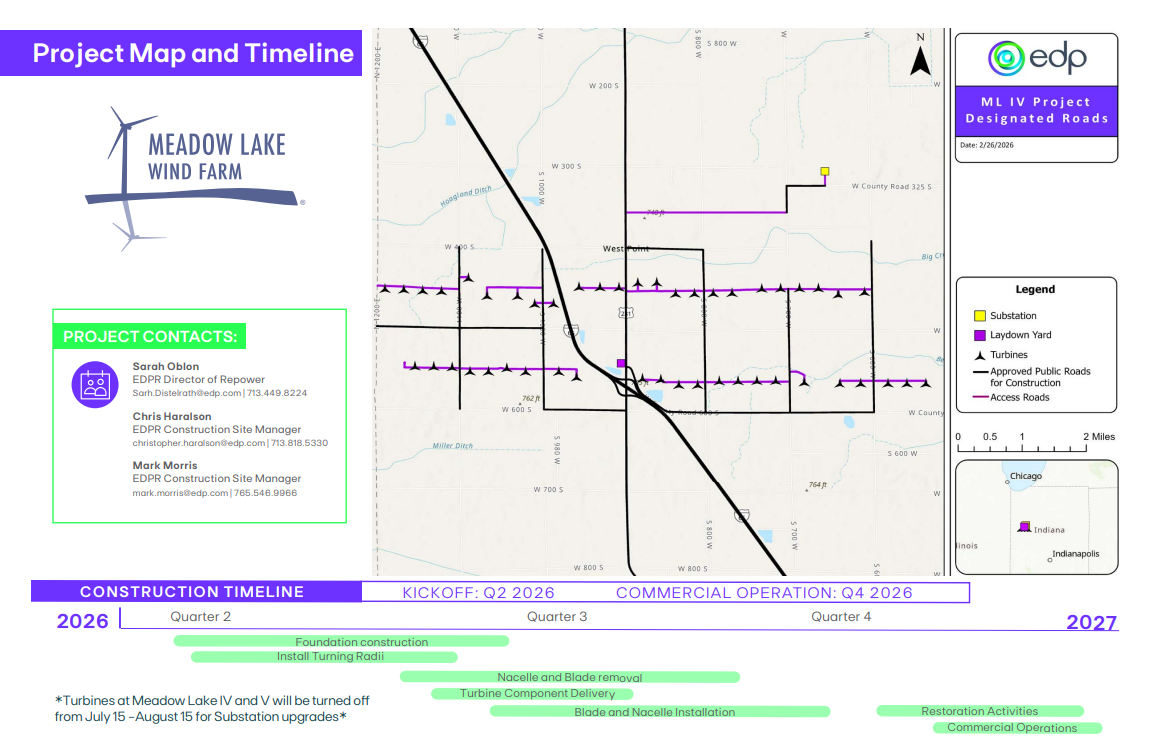
Construction for Meadow Lake Wind IV Repower will be ongoing throughout 2026. The anticipated timeline is below.
Renewable energy technology

Energy security

Wind energy and land use

Wind energy and American manufacturing
- EDPR NA currently operates 508 turbines across White, Benton, and Jasper counties. What you are looking at are 6 phases of the Meadow Lake Wind built over the last 20 years. EDPR NA has also constructed Sweet Acres Wind and, most recently, Carpenter Wind in Jasper County.
- These turbines supply 1.2 GW of clean energy to Indiana’s power grid. This is equivalent to over 338,200 Hoosier homes. In addition to the power put on the grid, EDPR NA has created more than 85 permanent jobs in the community. A majority of our wind technicians at Meadow Lake are local residents of White, Benton, and Jasper Counties.
- This has created over 85 permanent jobs in the area for wind technicians, office administrators, and other positions. In addition, thousands of jobs have been created during construction across the different phases of the projects.
- The projects are sited on land leased from local landowners, many of whom are farmers still growing or grazing beneath the wind turbines. Through 2025, the projects have paid local landowners more than $65 million, and are expected to pay more than $70 million more over the rest of their operational lives.
There are several turbine models across the different phases of wind farms. The shortest turbines are 397 feet from the base to the tip of the blade. The tallest turbines are 570 feet.
The flashing red lights are required by the Federal Aviation Administration (FAA). These lights alert planes and other aircraft of the wind turbine locations. You will notice that our turbines in Jasper County do not blink red as often as our turbines in White County. This is because these turbines are the newest in our fleet and feature the latest technology. These lights only flash when an aircraft is within 3 miles horizontally, or 1,000 feet from the tip height of the tallest turbine.
It only requires wind speeds of about 7-10 mph to spin a turbine. Though wind speeds near the ground may seem calm, they’re typically faster at the height of the turbine’s blades.
- The turbines behind the stage have been taken out of production for the day so, out of an abundance of caution, so emergency vehicles and concert staff can have full use of the road during the event.
- Sometimes turbines aren’t spinning because maintenance is underway, or the grid is too full to store the power they’d generate. It’s much easier to stop a turbine from generating power that can’t be stored or used, than to pause operations at traditional energy generation sites.
- If you drove in along I-65, you may have seen blades on the ground and many paused turbines. This is our Meadow Lake 4 repower project. This phase of the wind farm was originally built in 2009 with turbines set to last roughly 20 years. It is currently being repowered with new technology.
- As turbines age, EDPR NA may consider replacing major components or rebuilding the turbine completely anew before a turbine reaches the end of its original operational life span. This process is called “repowering.” Meadow Lake 4 is undergoing a partial repower. This means that the nacelle and the blades are being replaced, but the tower remains the same. To learn more about repower, click here.
Like any technology, wind power technology is constantly improving. With age, older technologies can become more expensive or challenging to repair. Repowering allows EDPR NA to harness technological advancements that were unavailable when the site was initially developed; repowering increases project efficiency and maximizes power generation in some of the nation’s windiest locations—all while working with the same landowners and using existing infrastructure
- For Meadow Lake 4 repower, all metal and oil from the nacelles are being 100% recycled. The fiberglass from the blades is being sent to a waste to energy facility where they will generate energy.
At EDP Renewables North America, we believe the energy we produce must not only be renewable, but also infinitely sustainable. To achieve that goal, we launched the Close the Loop program, an industry-leading initiative based on circular economy principles to minimize waste and maximize resource recovery and reuse.
To learn more about EDPR NA’s commitment to the Close the Loop program, click here.
Wind turbines pay off their lifetime carbon footprint (from manufacturing, transporting, installing, and operating) within 1-2 years of operation, allowing it to spend the rest of its 25-year life making a massive impact on avoiding emissions and pollutants. (Source: What's the carbon footprint of a wind turbine? » Yale Climate Connections)
- All forms of energy generation receive tax incentives, but only after they have already been built, and historically, fossil fuels have enjoyed significantly more of these benefits than renewables. In fact, the renewables-specific tax credits have largely been phased out.
- Any tax incentives that we receive for building projects drive down the overall cost of electricity.
- About 84 percent of all U.S. farm households earn the majority of their total household income from off-farm sources and often use off-farm income to cover some portion of farm expenses. Through landowner payments from renewables, farmers are better able to generate money on the farm and use those profits to sustain the farm. (Source: USDA 2023 Farmers and Ranchers at a Glance Report)
- The reliable, regular income from a wind farm lease helps balance out the fluctuations of agriculture, overall helping to stabilize the income of farmers and strengthen their businesses to ensure they’re able to continue farming. Farmers with wind turbines also appear to be more confident that they will be able to own the farm throughout their entire lives. In a University of Michigan study, survey results showed that 80% of those with wind turbines had a succession plan for their farm, while only 62% without a turbine had a succession plan. The researchers determined the difference was most likely due to the added income the wind farm provided. (Source: https://scholarship.law.columbia.edu/cgi/viewcontent.cgi?article=1218&context=sabin_climate_change)
Not all land that is leased or under option will be used for wind farm infrastructure. On average, only 1% or less of the total leased acreage is actually used for project equipment. The remaining ~99% can still be used by the landowner as they see fit, including farming, grazing, and ranching. Many farmers use the turbine access roads to reach their fields and farm right up to the base of the tower. (Source: University of Michigan)
This area grows primarily corn and soybeans. While sweet corn is grown, a majority of the corn grown in the area is used for ethanol, another form of energy. There is a very minimal loss of food production due to wind across these counties.
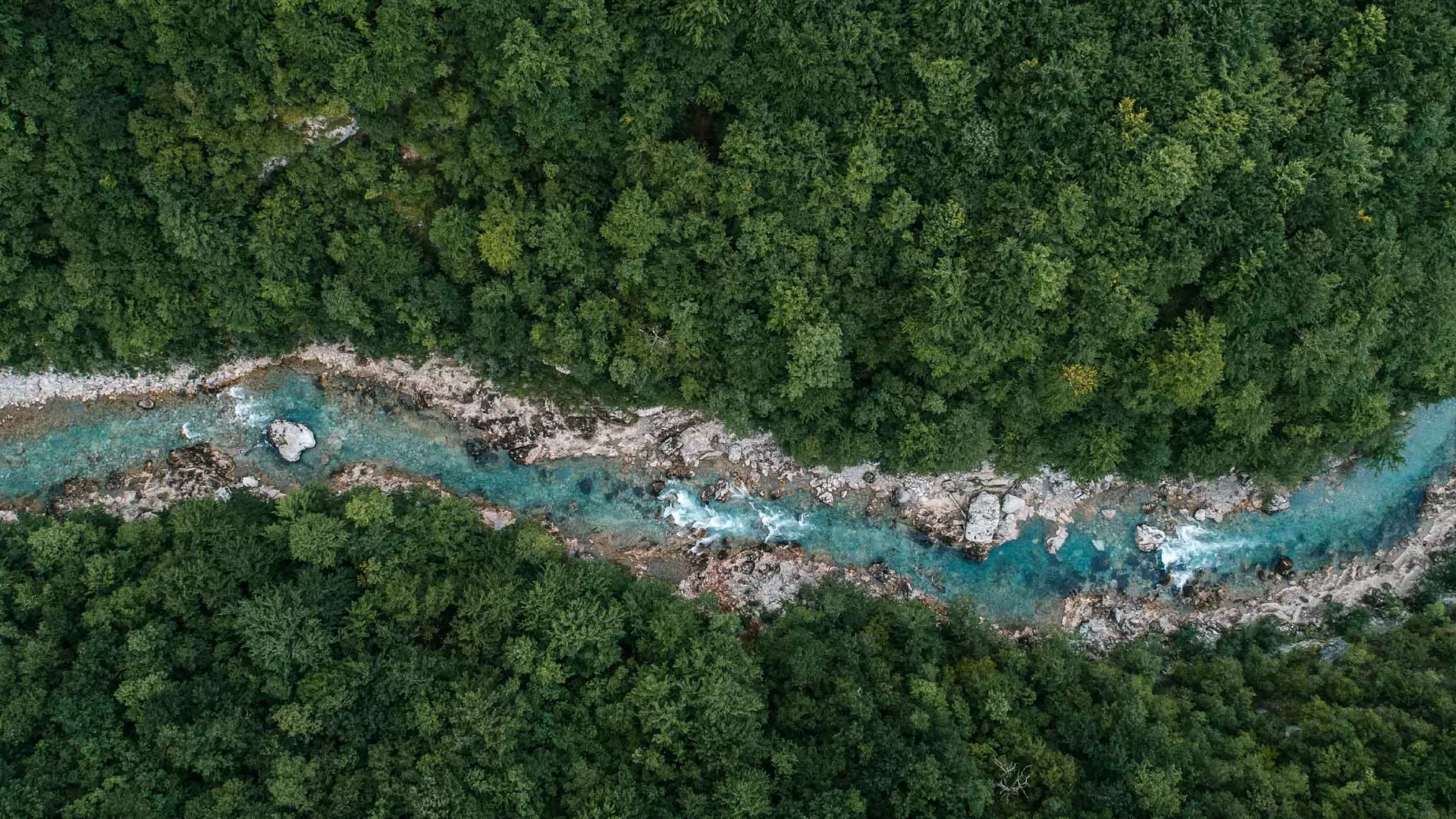
1.4 billion gallons of water saved each year
Downloads
Meadow Lake Wind Farm
Operations & Maintenance Office
6072 South State Road 43
Chalmers,IN 47929
713.997.7073


