


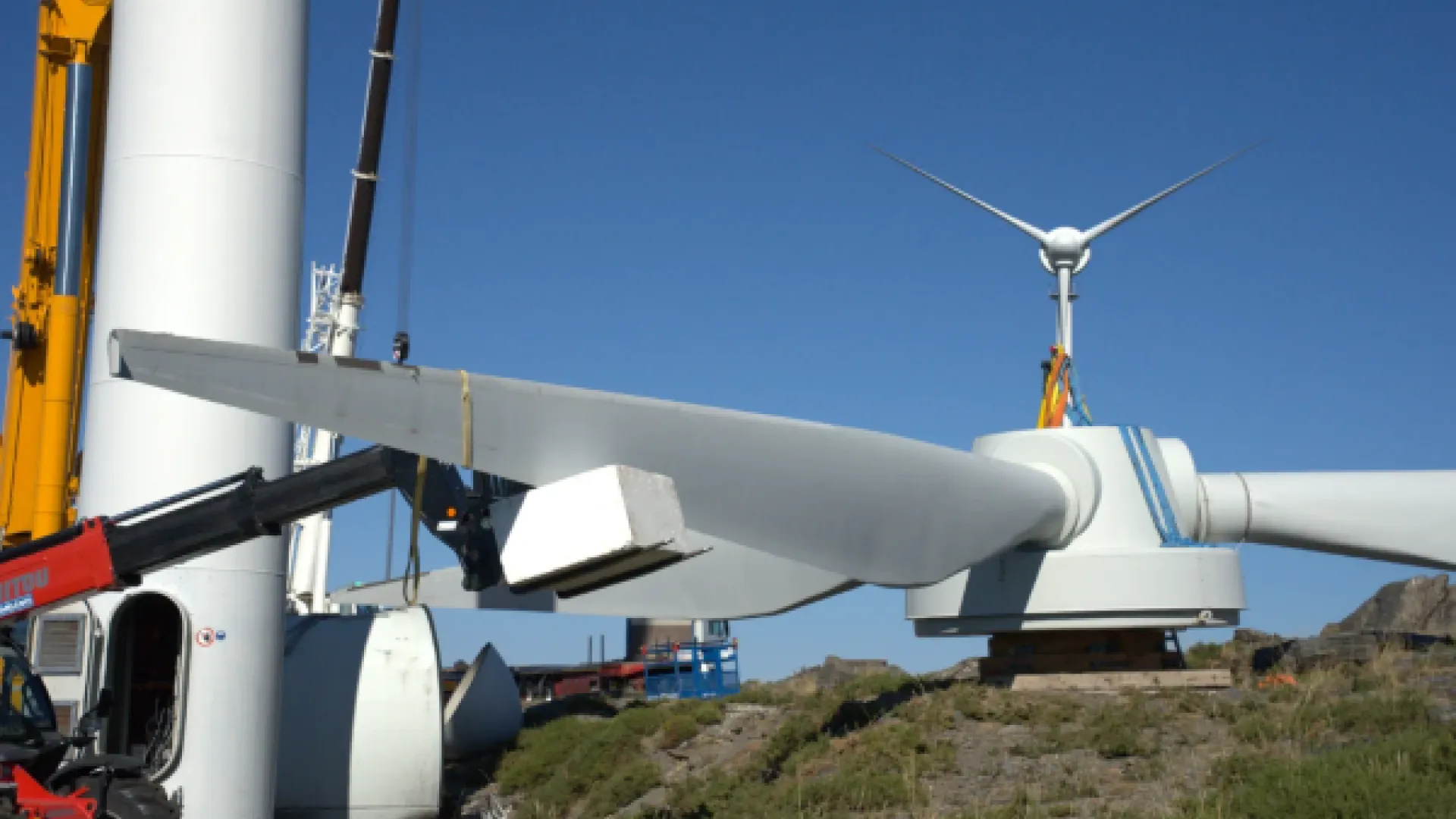
EDP launches pioneering repowering project at Pena Suar Wind Farm
The project will replace 20 end-of-life wind turbines with four next-generation units that are more efficient and will increase renewable energy production by 143%. Materials such as turbine blades will be recycled.
EDP has begun repowering works at the Pena Suar Wind Farm, located in the Marão mountain range, in a pioneering project that marks a new chapter in the evolution of wind energy in Portugal. The project involves replacing 20 of the 24 turbines currently in operation with four next-generation units that are more efficient, more powerful and capable of generating 143% more clean energy, or 2.4 times the current output, while using fewer resources.
Each of the 20 existing turbines, with an installed capacity of 500 kW, will be replaced by four new turbines with an individual capacity of 4.5 MW. The wind farm, which entered operation in 1998, will therefore increase its installed capacity from 10 MW to 18 MW, while its average annual renewable energy production is expected to rise from 22.9 GWh to 55.4 GWh. The remaining four turbines, which already contribute 8 MW to the site’s total capacity, will remain in operation and are also expected to be repowered once they reach the end of their operational life.
With work now underway on site, Pena Suar becomes EDP’s first repowering project in Portugal, representing an investment of €24 million. Through this initiative, the company reinforces its commitment to modernising its renewable assets and advancing an energy transition that goes beyond building new capacity, extending to the responsible management of equipment throughout its operational lifetime.
As some of the first wind farms installed in Portugal and across Europe approach the end of their lifecycle, repowering is becoming increasingly important in the energy transition. Repowering involves replacing older equipment with more modern, efficient technology that offers greater generating capacity, enabling existing renewable resources to be used more effectively and extending the operational life of clean energy generation sites.
At Pena Suar, the 20 existing turbines will be dismantled, while infrastructure including the substation will be refurbished before the installation of the new equipment. Each turbine is expected to take approximately two to three days to be fully dismantled.

Scheduled for completion by the end of the first half of 2027, the Pena Suar project is a tangible example of how technological innovation, operational efficiency and sustainability can go hand in hand. On-site works began around one month ago with the dismantling phase, which is expected to continue until early 2027. The installation of the new turbines will then follow, with assembly anticipated to be completed during the first quarter of that year.
At a time when an increasing number of European wind farms are approaching the end of their operational lifecycle, repowering offers a strategic opportunity to continue expanding renewable energy generation, reduce resource consumption and extend the value of existing assets.
Giving materials a second life
In addition to modernising the wind farm, the project also stands out for integrating circular economy principles, including recycling, from the earliest planning and procurement stages. EDP has prioritised maximising the reuse, recovery and value of materials resulting from the dismantling process, ensuring that components retain as much value as possible throughout their lifecycle while contributing to a more efficient use of resources.
Among the components requiring more specialised solutions are the turbine blades. To address this challenge, partnerships have been established with companies specialising in the recycling and recovery of these materials, ensuring a responsible end-of-life solution for components that have contributed to renewable energy generation for decades.
Through this project, EDP is demonstrating that the energy transition does not end with the production of clean energy. It also encompasses how equipment is managed at the end of its useful life, promoting solutions that reduce waste, recycle materials and support an increasingly sustainable economy. For EDP, Pena Suar represents more than the renewal of a wind farm; it is an example of how the next phase of the energy transition will depend not only on building new renewable capacity but also on the intelligent modernisation of existing infrastructure and the responsible management of materials.
Repowering: What it means
Producing more energy with fewer assets. Repowering involves upgrading energy generation infrastructure, such as wind turbines, solar panels and generators, through the replacement of equipment or materials with more modern and efficient technology. It is an intervention that can be carried out at different stages of a renewable asset’s lifecycle whenever there is potential to improve performance, rather than only when an asset is nearing the end of its operational life. This approach increases renewable energy production, extends the lifespan of existing assets and makes better use of installed resources.
Pena Suar: Key facts
- Location: Marão Mountain Range
- Commissioned: 1998
- Current installed capacity: 10 MW
- Future installed capacity: 18 MW
- Current average annual production: 22.9 GWh
- Future average annual production: 55.4 GWh (+143%)