


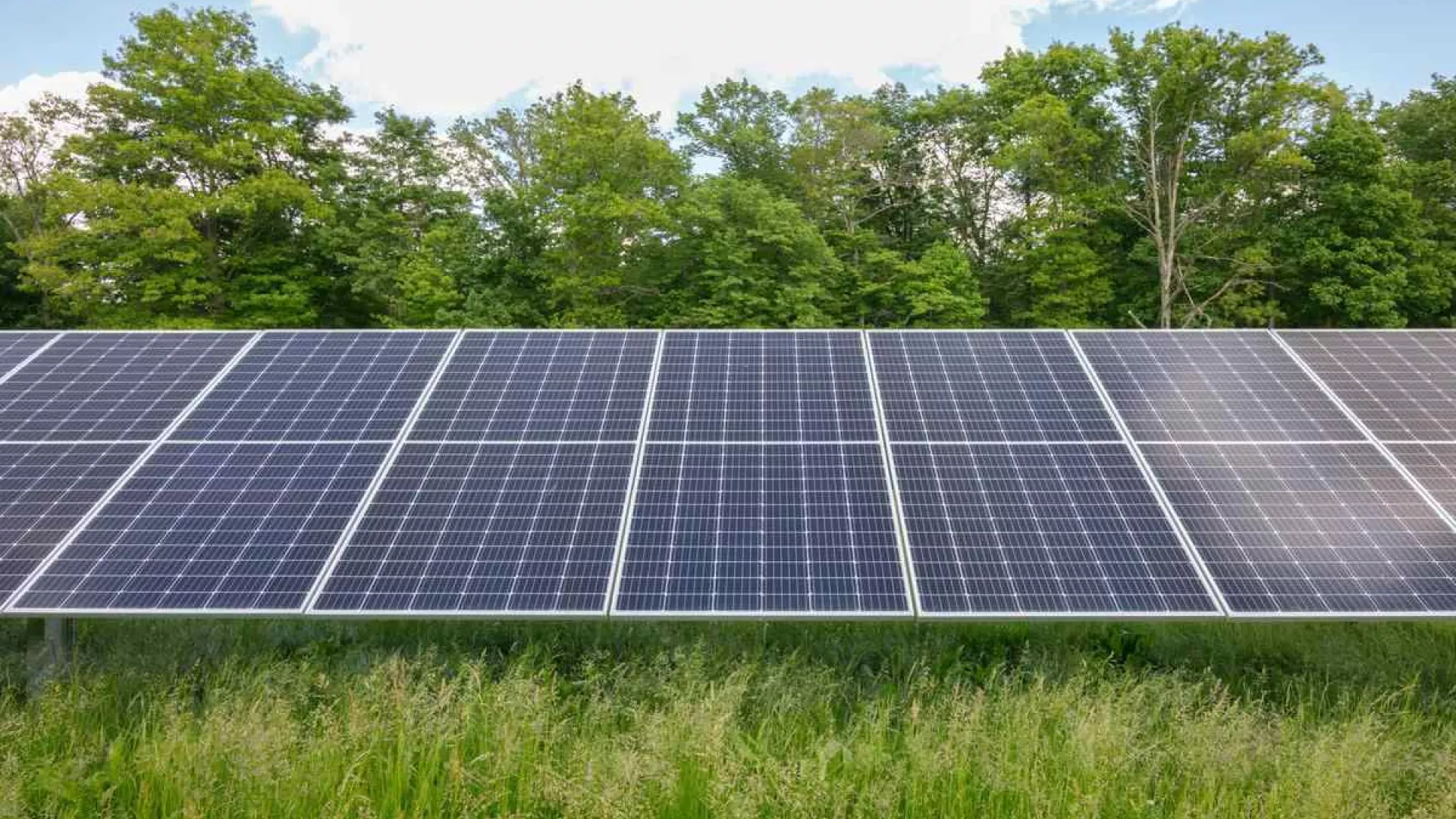
Alabama Solar Park
Project overview
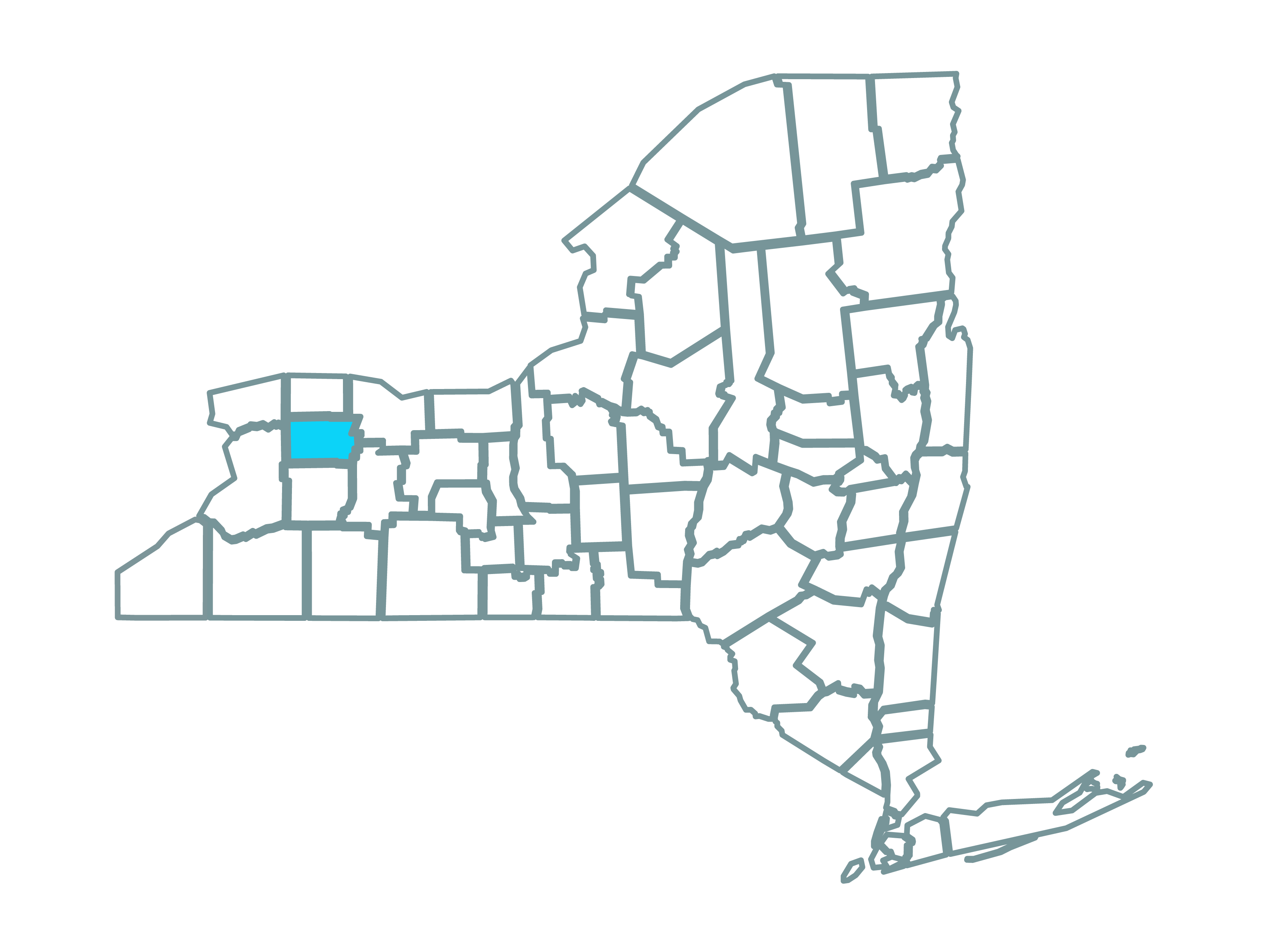
Alabama Solar Park will be located in northwestern Genesee County, New York, with facilities located in the towns of Alabama, Oakfield, and Batavia. Land agreements totaling 2,000 acres have been signed, with approximately 550 acres that will be utilized for solar energy infrastructure.
Economic benefits
Capital investment
Will be paid to local governments
Will be paid to landowners
Will be spent locally
250+ construction jobs and 4 permament jobs will be created
Project Permitting
Application status
View the application
Application materials
Permitting Process
Upon filing of the Article VIII Application, Alabama Solar will post funding ($1,000/MW), which can be sought by local community intervenors and host municipalities. Seventy-five percent (75%) of funds are reserved for municipalities.
Application for funds must be submitted within 30 days of the date the Article VIII Application is filed. Applications for intervenor funds can be submitted to:
New York State Office of Renewable Energy Siting and Electric Transmission, Attention: Request for Local Agency Account Funding, OGS Mailroom, Empire State Plaza, P-1 South, J Dock, Albany, New York 12242
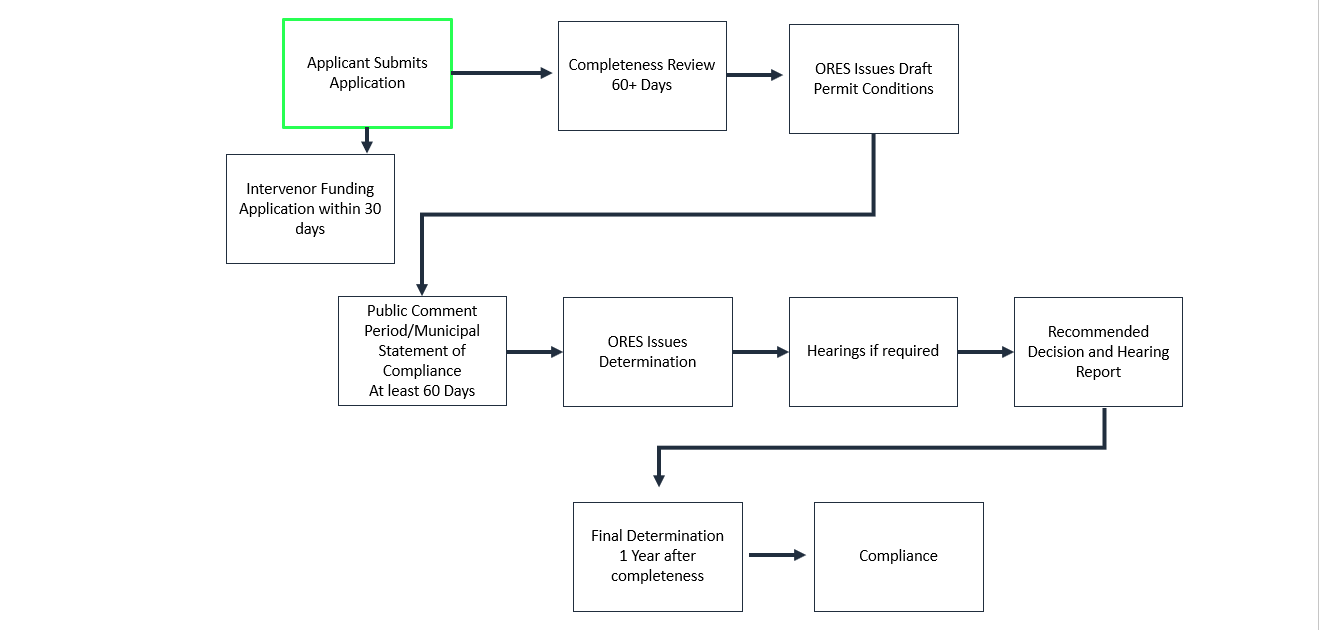
Below is a flow chart representing the Article VIII Application process.
Project Notices Updates
We will provide updates here as soon as we have them.
EDP Renewables North America (EDPR NA) trusts the landowners who are participating in the project to determine what is best for their land. All the land we plan to use for our project is leased to us from local landowners who are interested in hosting the project on their property, potentially alongside their existing farming operations.
- During the 30-year lifespan of the project, the land can rest and, by using cover crops to strategically rebuild organic matter, become more nutrient-rich. After the project is decommissioned, the equipment will be removed, and the land can return to its original use, including farming. This is contractually obligated under the lease agreements with the landowners and regulatory through the state.
- The project would require the use of 0.34% of agricultural land located in an Ag district in Genesee County; and 0.24% of prime farmland soils in the County. (Source: Prime farmland is calculated based on the MSGs Mineral Soil Groups 1 through 4 as classified and mapped by the NYS Ag and Markets)
The general impact of solar on land in the United States is also significantly smaller than one might think.
- U.S. corn uses more land than any other crop, at about 97 million acres, or a little over 5% of US land area.
- 40% of the US’s corn is currently used for ethanol production (38.8 million acres), which represents a little over 2% of U.S. land area. (Source: U.S. Department of Agriculture, Economic Research Service, Corn and Other Feed Grains - Feed Grains Sector at a Glance)
- The project would require the use of 0.34% of agricultural land located in an Ag district in Genesee County; and 0.24% of prime farmland soils in the County. (Source: MSGs Mineral Soil Groups 1 through 4 as classified and mapped by the NYS Ag and Markets)
- According to research conducted by Lawrence Berkeley National Laboratory, it would take less than 0.6% of the total land area in the United States to power the entire country on PV solar, which would never happen for many reasons.
Yes –less than 10% of the land used inside the fence is touched by physical infrastructure, and because Alabama Solar will do only minimal grading of the land, the topsoil will remain especially viable. All graded topsoil will remain on the landowners’ property.
Once the project ceases operations, EDPR NA is required to remove all infrastructure from the land, including the removal of the panels. The racking system is pulled out of the soil, and the land is remediated for agricultural use, with the benefit of decades of rested soil revitalized for crops.
One of the biggest appeals for landowners we work with is the opportunity to hold agricultural land in place for the next generation of family farmers while using the revenue from their lease agreements to make new investments in their farming operations.
Yes—Prior to project approval, EDPR NA is required by the State to implement a Decommissioning Plan and post a bond equal to 115% of the total cost to decommission the project. The bond is held by the local municipality, so if anything were to prevent EDPR NA from removing the facility, the town would be financially covered. Additionally, the decommissioning costs are assessed every 5 years to account for inflation, and EDPR NA is required to update the bond accordingly.
The decommissioning plan details how the infrastructure will be removed and restored after the project is removed from operations. Once fully decommissioned, the land, at the landowner's discretion, may be returned to its original use, including farming, ranching, or wildlife habitat.
The components used in solar panels are safe, tested, and commonly found in other everyday items, including cell phones. Silicon-based PV cells are the most widespread solar photovoltaic technology. Silicon, the second-most common element on Earth, is found in most consumer electronics, from cell phones to computer chips. Panels use a fully sealed technology that blocks trace metals from entering surrounding soils, even if cracked, like a phone screen. There are no liquids inside the panels that could leak out.
If a hailstorm comes through, any broken panels will be replaced and properly disposed of. It is in our best interest to replace them promptly, as a broken panel will not generate electricity. That said, all solar panels are tested for hail resilience, and EDPR NA specifically acquires panels that meet an even higher standard, so significant damage is unlikely outside of the most extreme hailstorms.
Countless academic studies and scientific institutions have concluded that solar panels do not cause cancer. Solar facilities generate electromagnetic fields like those of household appliances, which dissipate with increasing distance and pose no health risk to neighboring residents. There is no known mechanism within the range of electromagnetic frequencies produced by similar devices, such as electrical appliances, power lines, and smart meters, that could cause cancer, per the National Cancer Institute. (Source: National Cancer Institute, Electromagnetic Fields and Cancer)
EDPR NA’s solar panel suppliers have completed studies analyzing the potential for component materials to leach into the environment (under extreme conditions that are like being pulverized in a landfill) to confirm that no harmful levels of toxic or hazardous materials would be released.
These panels are considered regular waste, rather than hazardous waste, and thus could safely be disposed of in a landfill, which is also indicative of their material safety. However, EDPR NA’s “Close the Loop” program is dedicated to strong recycling initiatives, which keep our solar panels out of landfills.
In the rare case that a panel is damaged during construction or operation, EDPR NA would immediately clean up all residual materials and, in most cases, send the panel for recycling. The limited time a broken panel would be exposed to the ground, along with studies showing that no harmful levels of waste leach, indicate there would be little to no impact on the surrounding soil, even when damaged.
EDPR NA aims to build projects in a way that cares for and tends to the environment. We take our impacts on the environment seriously and devote significant resources to ensuring appropriate permitting, siting, and mitigation measures are implemented so our impacts to all wildlife and ecosystems are minimized as much as practical and avoided if possible.
Biologists have completed numerous rare, threatened, and endangered (RTE) wildlife studies on the Alabama Solar project land since 2021. These studies were completed in accordance with New York State =guidelines to document observations or audio detections of RTE species. The results of these surveys have been shared with state agencies and are being used to develop avoidance, minimization, and mitigation strategies that result in a net conservation benefit for potentially impacted species such as grassland birds.
It is also worth noting that other potential sources of energy to meet modern energy demands largely involve burning fossil fuels, which are, without question, detrimental to wildlife, their habitats, and humans, given their significant air and water pollution.
Alabama Solar will have a very small tree-clearing impact, limited mostly to hedge rows and forest edges to avoid shading panels.
On average, utility-scale solar projects typically pay off the energy footprint required to manufacture, transport, and build them in less than 1.2 years and pay off their carbon footprint within 2.1 years of operation. (Source: NREL, Energy and Carbon Payback Times for Modern U.S. Utility Photovoltaic Systems).
The remaining ~28 years of a solar park’s life are just straight positive impact, producing clean energy without pollution and avoiding emissions.
All forms of energy generation receive federal tax incentives—but only after they have already been built—and historically, fossil fuels have enjoyed significantly more of these benefits than renewables. The energy industry—not just renewables—is heavily incentivized by the US and state governments because energy security is so important for the country. Tax incentives we receive for building projects reduce the overall cost of electricity, benefiting everyone.
EDPR NA did not site the project in Genesee County based on these incentives and has not been relying on local tax incentives to make this project profitable. As such, there is no change to project plans because of these incentives being removed from consideration.
This project will help strengthen the overall electrical grid for all users by adding additional capacity to power the homes and businesses when needed, while adding price certainty for consumers over the life of the project.
In New York, we sell the power produced through a Purchase Power Agreement (PPA) with the New York State Energy Research and Development Authority (NYSERDA). The PPA provides guaranteed, fixed- price energy to the State for the life of the project, and we sell the financial value of the power generated to a commercial purchaser in the form of renewable energy credits (RECs), a tradeable financial commodity.
Regardless of how the power is sold, the electrons generated at this project will flow through the grid to the closest place where they’re needed along the path of least resistance.
The electrical grid isn't like a pipeline that sends power directly from the generator to the purchaser. It’s more like a larger water system with pipes connecting multiple generation sources with multiple consumers. Like water filling pipes, the electrons will fill the transmission lines and exit the system wherever the closest need is located.
No, you are not paying for renewable energy projects to be built. The cost of power is directly related to demand. Utility bills have risen sharply across many parts of the country, but renewable energy deployment is not the cause.
There are three main reasons:
- Our electric grid is aging and in need of costly upgrades, which are passed on to ratepayers. Much of our electric grid was originally built in the 1960s and 70s. It has been somewhat modernized since, but most of it is still from before 2000. (Forbes: Why Your Electricity Bill May Be Skyrocketing)
- When you combine power grid infrastructure from the 90s and earlier with the electricity demands of today, the grid struggles to keep up. Think about how different household electricity usage looks today, with most Americans having multiple smartphones, computers, televisions, video game consoles, appliances, etc., plugged in at once, compared to the 90s. Commercial energy use has risen exponentially alongside household energy use. With the huge power demands of widespread AI data centers factored in, the grid struggles to keep up with the load it wasn’t originally designed to handle. When demand goes up, prices go up. (Fox News: AI data centers driving electricity bills up by 20% across 13 states | Fox News. Daily Caller: Utility Bills Spiking As America’s Power Demand Takes Off | The Daily Caller. New York Times: Data Centers to Add Billions of Power Costs in 13 States)
- Natural gas prices are volatile and easily affected by conflicts happening in countries on the other side of the world. American natural gas is shipped overseas—to Europe, Asia, and Latin America—where prices are much higher, so U.S. families are now competing with foreign buyers willing to pay more for the same gas, bidding up prices.
- Wind and solar energy are, without question, the cheapest sources of energy and inherently stable in price. Renewable energy projects sell power through fixed-price contracts, which protect buyers from market swings. The “fuel” is free, and the vast majority of costs are upfront, so we can lock purchasers, like utilities, into a guaranteed price for decades, which the volatile global oil and gas market could never do. (Forbes: Why Your Electricity Bill May Be Skyrocketing. NPR: Electricity prices are climbing more than twice as fast as inflation.
Another big source of demand is from record-breaking heatwaves across the country. As far as our power bills go, it doesn’t matter what is making summers hotter – we just know that they are, which increases air conditioning use, which forces utilities to buy expensive electricity on the spot market (where energy is priced by demand), to avoid blackouts. (Source: Home electricity bills may reach a 12-year high this summer, driven by high temperatures, inflation - CBS News)
The need to meet this demand is also pushing utilities to keep uneconomic power plants online longer (coal plants in particular), when they were previously planned to go offline due to no longer being affordable to run. But now we’re so desperate for power, utilities are keeping them going anyway, despite it being very expensive, and American families are paying for it. (Forbes: Why Your Electricity Bill May Be Skyrocketing. CBS News: Why utility bills are rapidly rising in some states - CBS News)
There are many reasons power bills are rising for Americans, but American wind and solar energy aren’t one of them.
This stat is looking at capacity factor, which is the percentage of available solar radiation that a solar panel is able to successfully convert into usable electricity. It is a helpful stat for people in the industry to pay attention to when choosing between different solar panel modules and trying to increase that efficiency in general, but it isn’t an indicator of efficacy. It just means solar panels can currently only convert about 30% of an essentially infinite, free source – sunlight. Because solar’s “fuel” is free, collecting and converting even a fraction of a free source is enough for the process to be economically viable. In fact, utility-scale solar and wind are among the most affordable options for companies and utilities to procure electricity. Even so, research into increasing their efficiency is ongoing. (Source: Lazard Levelized Cost of Energy)
The amount of power produced depends on the panel type. The utility-scale panels EDPR NA uses are very efficient in both cloudy and snowy conditions. EDPR NA often uses bifacial panels, which means they have solar cells on both the front and the back. This allows light reflected from the ground, especially that which bounces from snow, to generate electricity as well.
Alabama Solar anticipates paying over $15 million to the local community over the life of the project. Prior to full authorization of the project, EDP Renewables is required to negotiate a Payment in Lieu of Taxes (PILOT) agreement and Host Community Benefit Agreement (HCBA) with the municipalities where the proposed Alabama Solar Park is located. These agreements are to be paid in addition to the standard property taxes that EDPR pays on the leased parcels.
The PILOT is an annual direct payment to local governments. These payments are in addition to the property tax payments for the parcels where solar facilities will be sited. This funding is used at the discretion of the municipalities to supplement budgets for schools, roads, town services, or other needs identified by the town.
The HCBA consists of additional annual payments to the municipalities to fund various community benefit initiatives, including special community projects, job training programs, environmental restoration, and school programs.
Together, the PILOT and HCBA are paid annually for the 30-year life of the project, and work to deliver additional financial resources and social value to the host communities.
Taxing Jurisdictions Receiving PILOTs & HCBA | Payment per MW | Estimate for Year 1 | 20-Year Total Estimate | Years 21-30 Tax Estimate (Cumulative) |
Genesee County | $823 | $107,000 | $2,500,000 | $250,000 |
Town of Alabama (85MW) | $1,659 | $148,000 | $3,600,000 | $50,000 |
Town of Oakfield (23MW) | $2,005 | $46,000 | $1,100,000 | $30,000 |
Town of Batavia (23MW) | $1,790 | $41,000 | $999,000 | $16,500 |
Oakfield-Alabama Central School District | $1,869 | $243,000 | $5,800,000 | $575,000 |
Facility Total | $4,500 (per Town) | $585,000 | $13,999,000 | $921,500 |
Several factors shape local property values, including the quality of area schools, noise, and public infrastructure. The payments made by Alabama Solar to the county and community can be used to improve or expand local services that increase property value. Once construction is completed, solar is a very quiet neighbor that does not increase traffic or population in a way that strains existing services.
Research from multiple academic institutions and project-specific research has not shown any negative property value impacts from projects like Alabama Solar.
- A 2024 study conducted by the School of Environmental Sustainability at Loyola University that looked at utility-scale solar facilities built in the Midwest from 2009 to 2022 found results indicating that utility-scale solar projects increase nearby property values by roughly 0.5–2.0 %.
- A 2018 study from the University of Texas at Austin found that public perception of solar park development negatively impacting property values was unfounded, as a majority of property appraisers either held neutral or positive impressions about a solar park’s proximate impact on home values.
- "The majority of respondents said it was their opinion that proximity to a solar installation had either no impact (66%) or a positive impact (11%) on home values. Those respondents who hadn’t actually ever appraised a home near a solar facility were more likely to assign a negative impact than those with experience in such appraisals…”
- A 2020 study published by the University of Rhode Island found that, while some negative land valuation could exist for solar park developments in non-rural areas where “green space” is considered limited, those negative-impact factors are not present in rural communities where “green space” is more abundantly available.
Contact us
If you have any remaining questions, please contact the project team:
Rachel Smith – Development Project Manager | Rachel.Smith@edp.com | 716.349.1629
Cia Jey — Development Analyst | Cia.Jey@edp.com | 437.224.0468
General inquiries: info@edpr.com
For more general information about solar and EDPR NA, visit https://linktr.ee/edprnorthamerica.
Renewable energy technology

Energy security

Solar as a neighbor

Solar panel technology

165 million gallons of water saved each year
Downloads
Contact us
Alabama Solar Park
Portland Regional Office
710 NW 14th Avenue, Suite 250
Portland, OR 97209
716.349.1629
AlabamaSolarPark@edpr.com


