


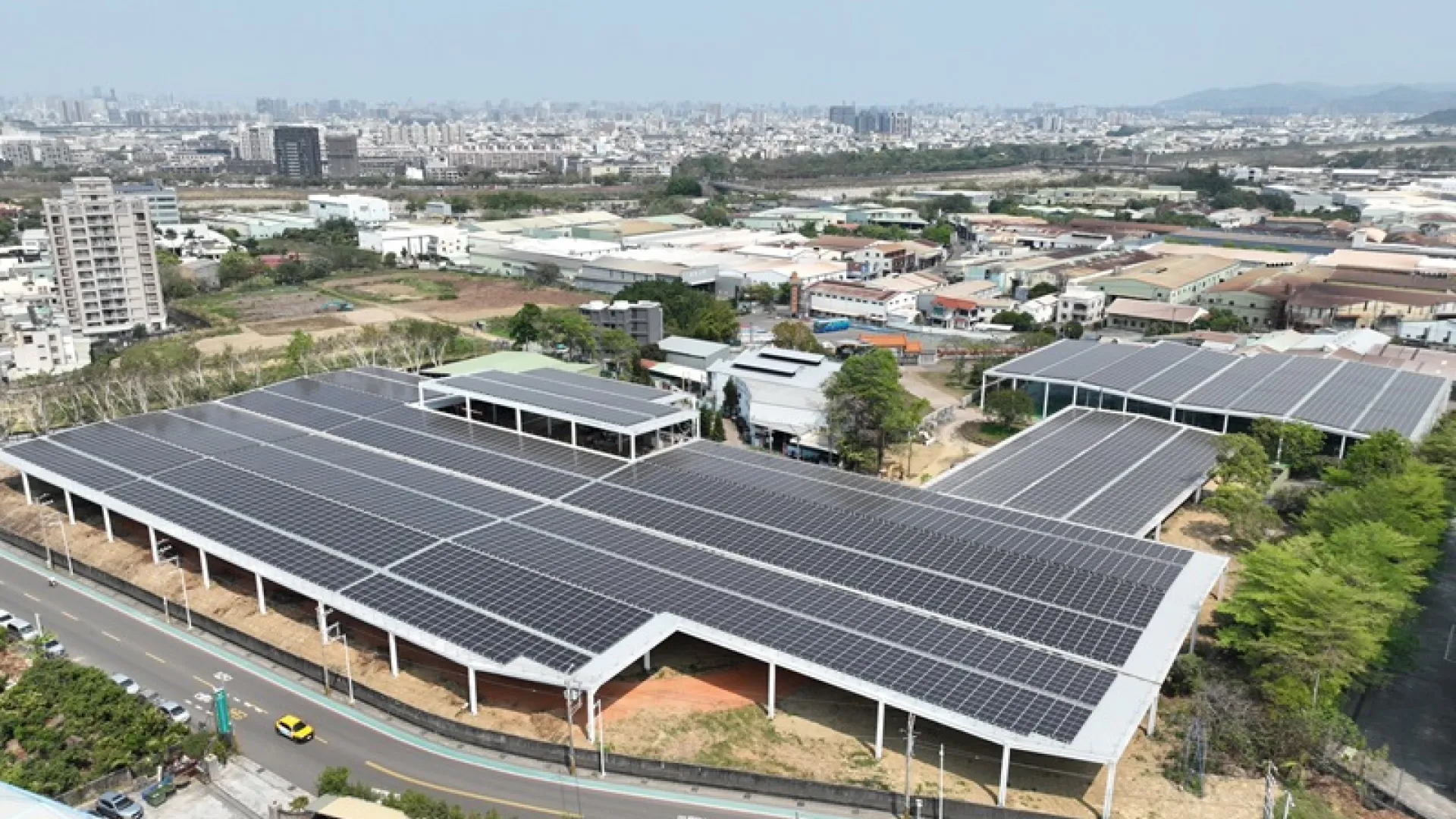
EDP commissions largest solar PV system in Taiwan for a sports complex at Taichung high school
- The 3.3 MWp facility stands as Taiwan’s largest solar PV installation integrated into a single site for an all-weather sports complex.
- The project strengthens EDP’s dual-use infrastructure strategy in Taiwan.
EDP, through EDP APAC, has successfully commissioned a 3.3 MWp solar photovoltaic (PV) system for an all-weather sports complex at Tzu Ming High School in Taichung, Taiwan. The facility stands as Taiwan’s largest solar PV installation integrated into a single site for an all-weather sports complex, demonstrating a highly scalable model for decentralised power generation within land-constrained urban environments.
The multi-functional facility provides an all-weather educational and recreational space for Tzu Ming High School’s international student body, while simultaneously serving as a green power plant. This move not only implements the concept of environmental stewardship but also makes the facility an important platform to promote environmental education. The system will generate over 4.63 million kilowatt-hours of clean electricity annually, effectively reducing carbon emissions by 2,224 metric tons* each year.
Beyond its technical specifications, the stadium also represents a significant community asset. Moving forward, the facility will be accessible to local residents for recreational activities and positions the school to host international sporting events in central Taiwan.
“The construction of this all-weather sports complex ensures Tzu Ming teachers and students have a dedicated space for sporting recreation year-round. Rain or shine, our students and faculty can come together to stay active and foster their physical well-being. To make the facility truly sustainable, we specifically installed solar photovoltaic panels on the roof, allowing the complex to not only provide shelter from the elements, but also generate clean electricity – advancing our commitment to environmental protection,” said Venerable Master Chang Lu, Chairman of Tzu Ming High School.
"To accelerate Taiwan's clean energy targets, we must look beyond ground-mounted solar and maximise the built environment. With Taiwan’s electricity consumption reaching 283 billion kWh in 2025 and land for renewables increasingly constrained, building generation into the spaces people already use is one of the most effective routes forward," commented Miguel Fonseca, CEO, EDP APAC. "At least 95% of Taiwan’s energy supply is imported, which makes every domestically generated kWh a direct gain in energy security, price stability and competitiveness. This facility delivers clean electricity where it is consumed and supports a more resilient Taiwan."
The Tzu Ming stadium project is part of EDP’s dual-use infrastructure strategy in Taiwan, demonstrating how renewable energy can be integrated into existing urban infrastructure. By overlaying a 3.3 MWp PV system onto educational infrastructure, EDP bypasses the regulatory and spatial bottlenecks typical of traditional ground-mounted solar. This approach maximises energy yield per square metre without competing for agricultural or commercial real estate, establishing a scalable commercial model for increasing installed capacity in dense markets.
This project reinforces EDP’s business strategy across the Taiwan market. The company plans to establish itself as an enabler of Taiwan’s energy transition, directly contributing towards the market's renewable energy targets. Recognising the need to optimise land use, EDP’s strategy mix focuses heavily on dual-use infrastructure and Corporate Power Purchase Agreements (CPPAs) in Taiwan. The company aims to scale its portfolio of these decentralised generation projects to ensure businesses and local communities have a continuous, reliable supply of green electricity.
With this milestone in Taiwan, EDP continues to execute its strategy to accelerate global electrification, focusing on high-quality, long-term contracted assets that deliver secure, stable power and create lasting value for clients and communities.
*Using Taiwan’s grid emission factor 0.494kgCO2e/kWh, Taichung City Sustainable and Low-Carbon Living Network.