


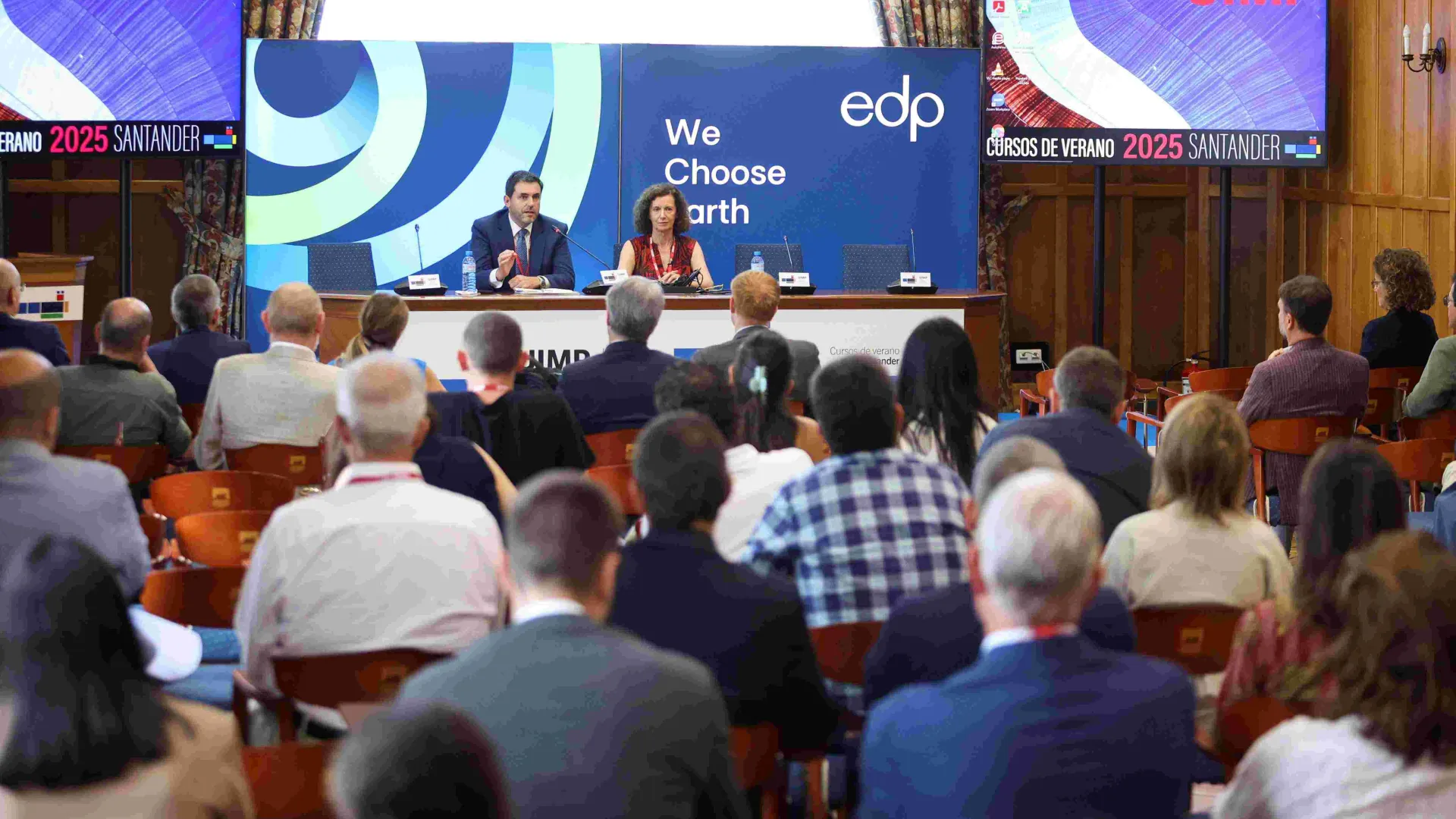
The final day of the EDP course at UIMP highlights the key role of citizens in the energy transition
The summer course "Energy Transformation: From Theory to Practice", organised by EDP at the Menéndez Pelayo International University (UIMP), has concluded with a focus on the social and technological aspects of the new energy model.
The Magdalena Palace hosted presentations and roundtable discussions on the challenges posed by a more electrified, connected, and participatory energy system. The day began with a roundtable discussion on electrification and digitalisation, moderated by Paloma Sevilla, General Manager of aelēc, which explored how these two levers are transforming network planning and operations, as well as the relationship with consumers. Participants included Jessica García (Eurelectric), Rocío Prieto (CNMC), Marta Sánchez (EY) and Alejandra López (EDP Redes España).
The participants agreed that electrification represents a clear opportunity for Spain’s reindustrialisation, although it is contingent on the availability of affordable energy, the deployment of new technologies and, above all, a regulatory framework that facilitates and prioritises access to the grid based on the value delivered. Likewise, the importance of investing not only in physical infrastructure but also in equipping the grid with intelligence—through sensors, automation, advanced data management and AI-based predictive maintenance tools—was highlighted. In this context, digitalisation is becoming a key enabler for anticipating demand, integrating distributed generation and maximising the use of an increasingly complex and demanding grid.
This was followed by a presentation from Bruno Espírito Santo on the E-Redes Open Data project, an initiative aimed at enhancing transparency and improving access to information about the electricity grid, thereby supporting more informed and collaborative decision-making.
Next, Rui Eustaquio, Director of Risk at EDP, discussed the risks of the energy transition, covering issues ranging from security of supply to the economic, geopolitical, environmental, technological, and social challenges associated with the shift to a new energy model.
The day concluded with a roundtable discussion on the social acceptance of the future energy model, moderated by Margarita Rojo, Deputy Mayor and Councillor for the Environment of Santander City Council. During the event, Juan Carlos Atienza (SEO/BirdLife), Antonio Cordón (Association for Energy Transition), Carlos Martí (Vientos de Futuro), and Miguel Hernández (Institut Cerdà) discussed the role of citizens in advancing the energy transition, as well as the key factors for strengthening trust and social acceptance of projects.
“This course has allowed us to focus on what truly matters: energy as an indispensable driver of socio-economic development, stable regulation as a facilitator of investment in renewable energy and networks, which are essential to tackling the major challenges of the energy system. All of this is key for Spain to develop its industrial potential linked to electrification, strengthen its energy security, and move forward with a transition that involves society as a whole,” concluded Yolanda Fernández, Director of Public Affairs & Stakeholders at EDP Iberia and Course Director.